Outdoor Pot and Planter Ideas for Every Style of Garden
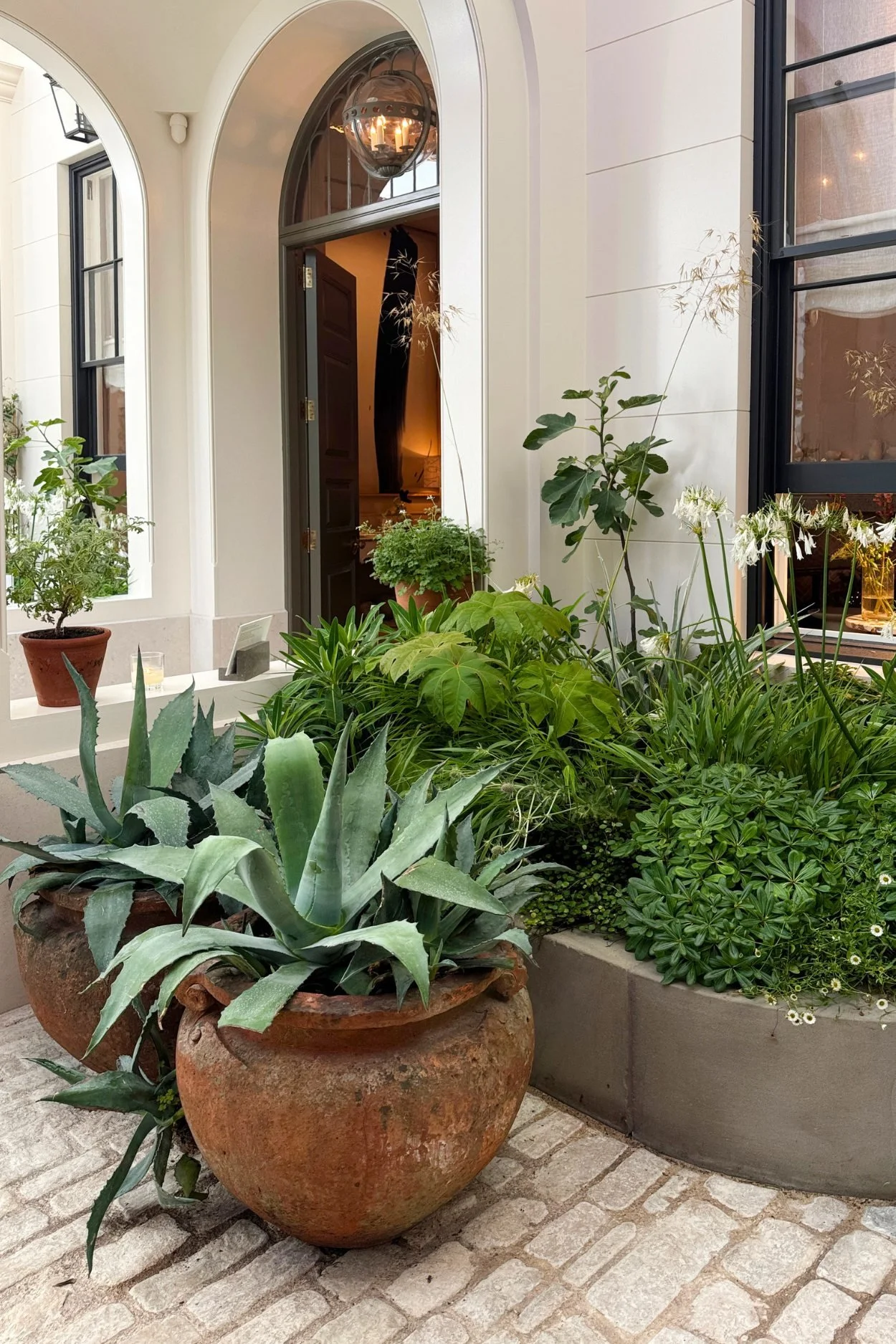
Photo credit: Sandra van Aalst at WOW!house 2026
Even the most beautiful gardens, terraces or patios can feel incomplete without a pot or two brimming with blooms or greenery. Pots and planters add structure and style to any outdoor area and, if you have a courtyard garden or balcony, they are essential for bringing nature, colour and foliage to the area.
Having written about modern organic indoor vases, during my research I came across so many gorgeous outdoor pots and planters. I was also looking for my own garden and recently added four square grey planters outside my front entrance, so I had spent time checking out all the different styles, shapes and materials available.
Being a keen gardener and lover of flowers, I have had almost every kind of pot and planter over the years. At the moment I have two oversized planters in my back garden; one containing an ancient olive and a brilliant white one with a cordyline palm. I also have two concrete pots filled with white geraniums and two tall stone planters with purple osteospermums. In my front garden I have three light sand-toned stone pots with white osteospermums and, along with my four square plastic ones, I have a complete mix of styles, shapes and materials to suit the different areas of my garden. As well as trees, shrubs, herbs and flowering perennials, you can also fill your pots with annuals such as cosmos, geraniums and daisies for an instant burst of colour.
If you favour an organic, rustic look, you can find beautiful vintage terracotta and clay pots, like the one above that I photographed outside this year’s WOW!house that have been filled with large structural agaves. There are also new pots that have a weathered finish that are made from lightweight composite materials, so they are much easier to move around and far less heavy than traditional stone or terracotta. By my front door I recently replaced several old chipped pots with four square grey plastic planters. What appealed to me was that they were lightweight yet give the appearance of stone. Even better, they are on wheels so I can move them around when I need to sweep the entrance.
Like indoor pots, outdoor pots come in a large variety of styles and materials, although they are much more durable, frost-resistant and hard-wearing. You don’t necessarily need to buy a traditional type of planter or pot. You can get creative with pre-loved basins, sinks, troughs, wash tubs, and even old wellington boots, turning them into characterful planters for your favourite blooms. These unexpected containers bring charm and personality to your garden, patio or balcony. I have a pebble-shaped basin that arrived chipped, so instead of throwing it away, I turned it into a planter for herbs, including mint and thyme.
To help you find your ideal pot or planter, in this article I’ll share with you a selection of different shapes, materials and styles, along with the most suitable plants for containers. One last comment before we take a deeper dive into outdoor pots and planters - you can also use them indoors. I have a planter in my entrance hall with a cheese plant that stands on a metre-high plinth that I bought from a garden centre in the Netherlands. If you are looking for indoor pots, check out my recent feature on:The Modern Vase Trend Defining Organic Interiors.
Different materials used for outdoor pots and planters
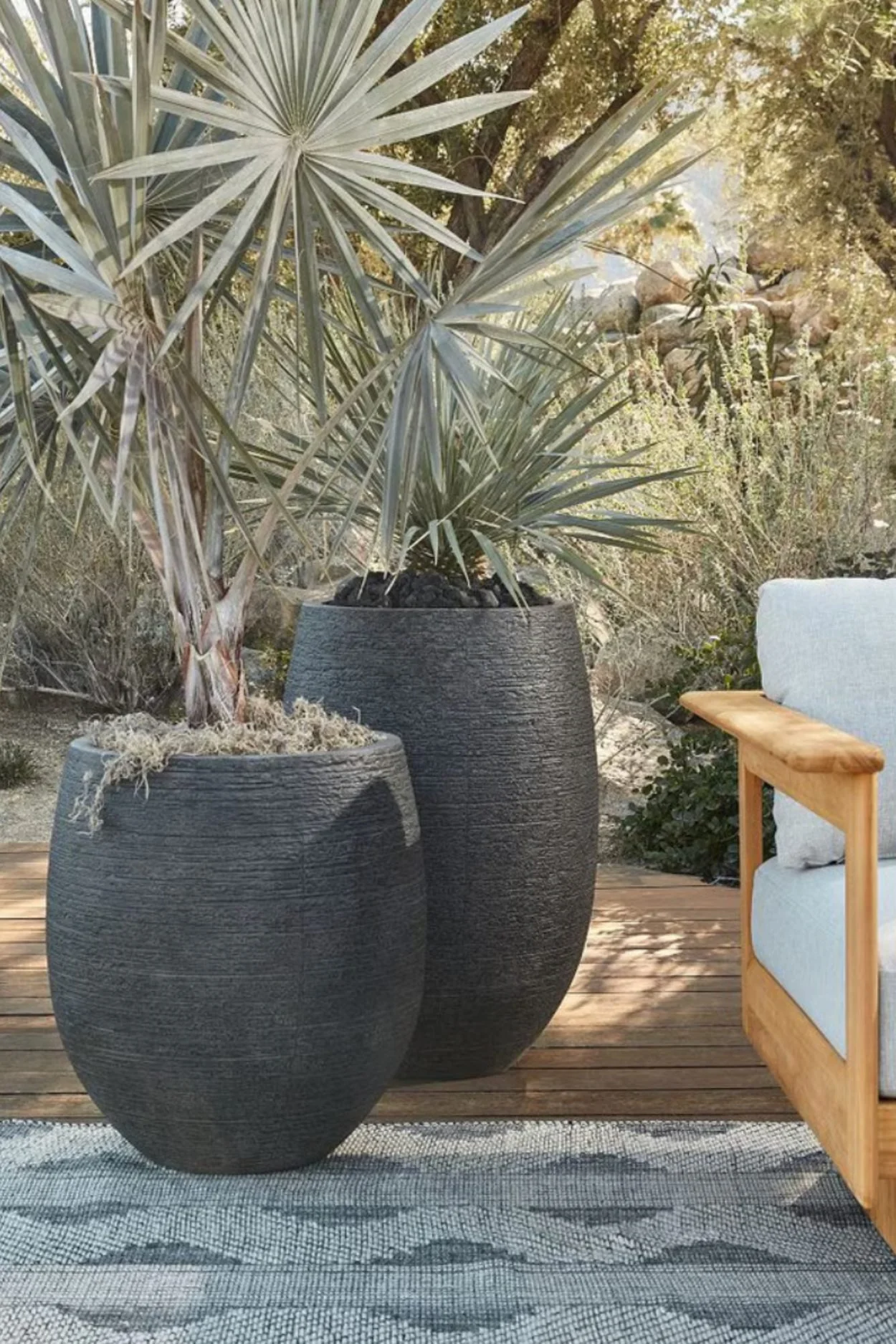
Photo credit: West Elm
Whatever it is, the way you tell your story online can make all the difference. Outdoor pots need to be made from durable, frost-proof materials that can cope with all weather conditions. These may be either natural or synthetic or a combination of both - like the striking dark-grey textured pots pictured here from West Elm, for example, which are made from hand-cast Ficonstone, a lightweight composite that looks like stone but is far lighter. Here is a list of some of the materials used for outdoor pots:
Concrete and stone - strong, heavy, substantial materials with a natural, textured finish. They are ideal for large plants and trees.
Terracotta and clay - classic pots that develop character as they weather.
Composite - materials such as Ficonstone and Fibreclay which combine stone, clay or concrete with a lighter-weight synthetic material, making them far more lightweight than stone, concrete or clay.
Wood - a natural option that works particularly well in rustic and contemporary gardens but needs to be regularly treated to prevent rotting.
Metal - includes Corten steel, galvanised steel, aluminium, zinc and cast iron.
Rubber - often made from recycled tyres, rubber planters are lightweight, durable and less likely to crack in cold weather.
Fibreglass and plastic - lightweight and available in a wide range of colours and shapes.
Different Styles of outdoor pots and planters
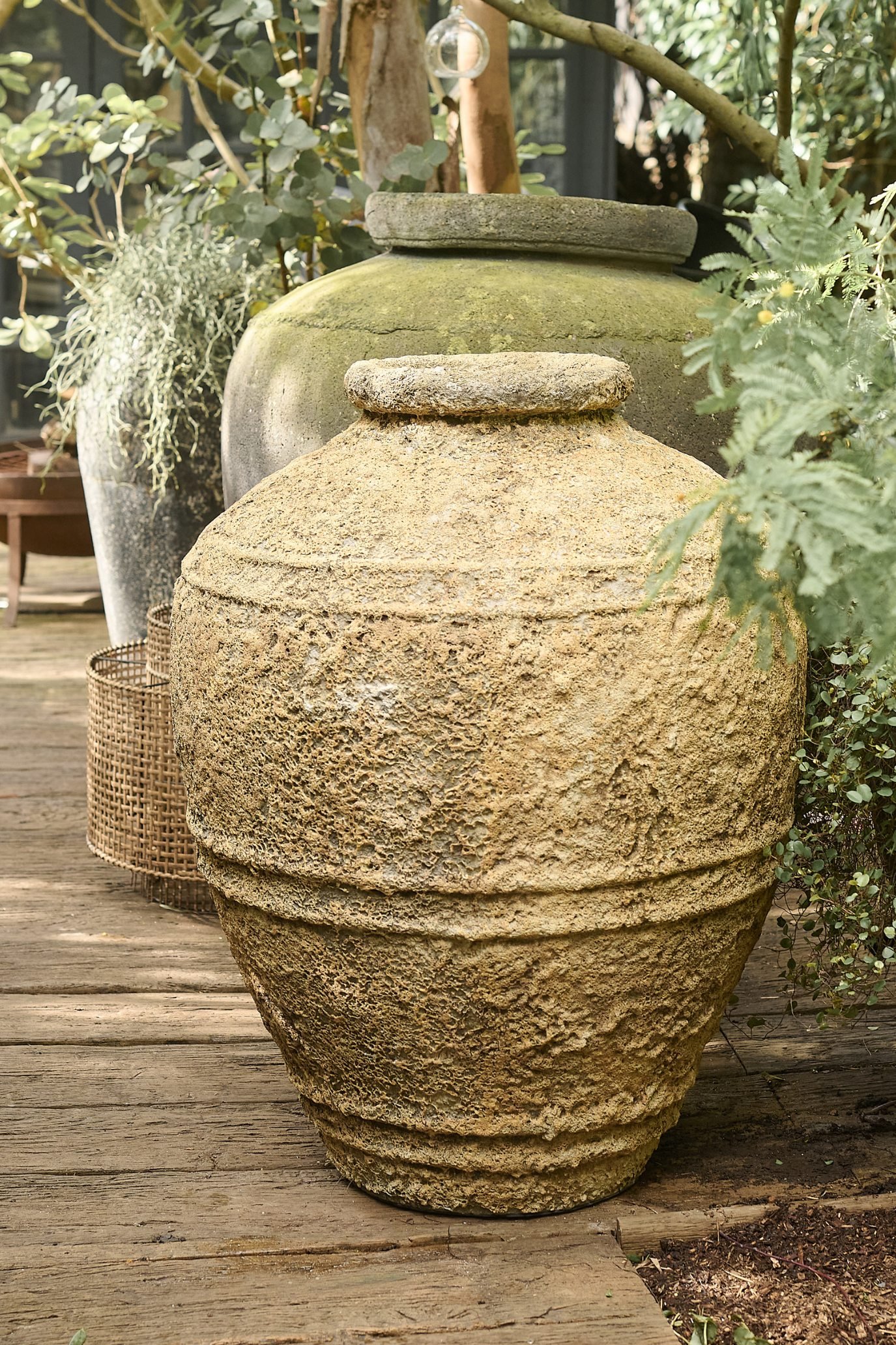
Photo credit: Abigail Ahern
Similar to indoor vases and pots, you can choose an outdoor pot or planter that reflects your interior style. This bold, rustic vase by Abigail Ahern, for example, is crafted from reinforced concrete and has the beautiful weathered appearance of a vintage pot. Its timeless design would look stunning in most outdoor settings.
I’ve divided outdoor pots into a few main styles, so you can see at a glance what would work best in your garden, terrace or balcony.
Contemporary – clean lines and simple shapes in black, white, grey and neutral tones.
Rustic – aged terracotta, weathered clay and textured finishes in neutral tones with an organic feel.
Colourful – glazed ceramic pots in colourful shades of blue, yellow and green.
Classic – traditional urns, pedestal planters and timeless stone.
Industrial – concrete and metal, including Corten in strong architectural shapes.
Farmhouse – zinc tubs, baskets, wooden containers, galvanised planters and vintage-style pots with a country feel.
What to plant in your pots and planters
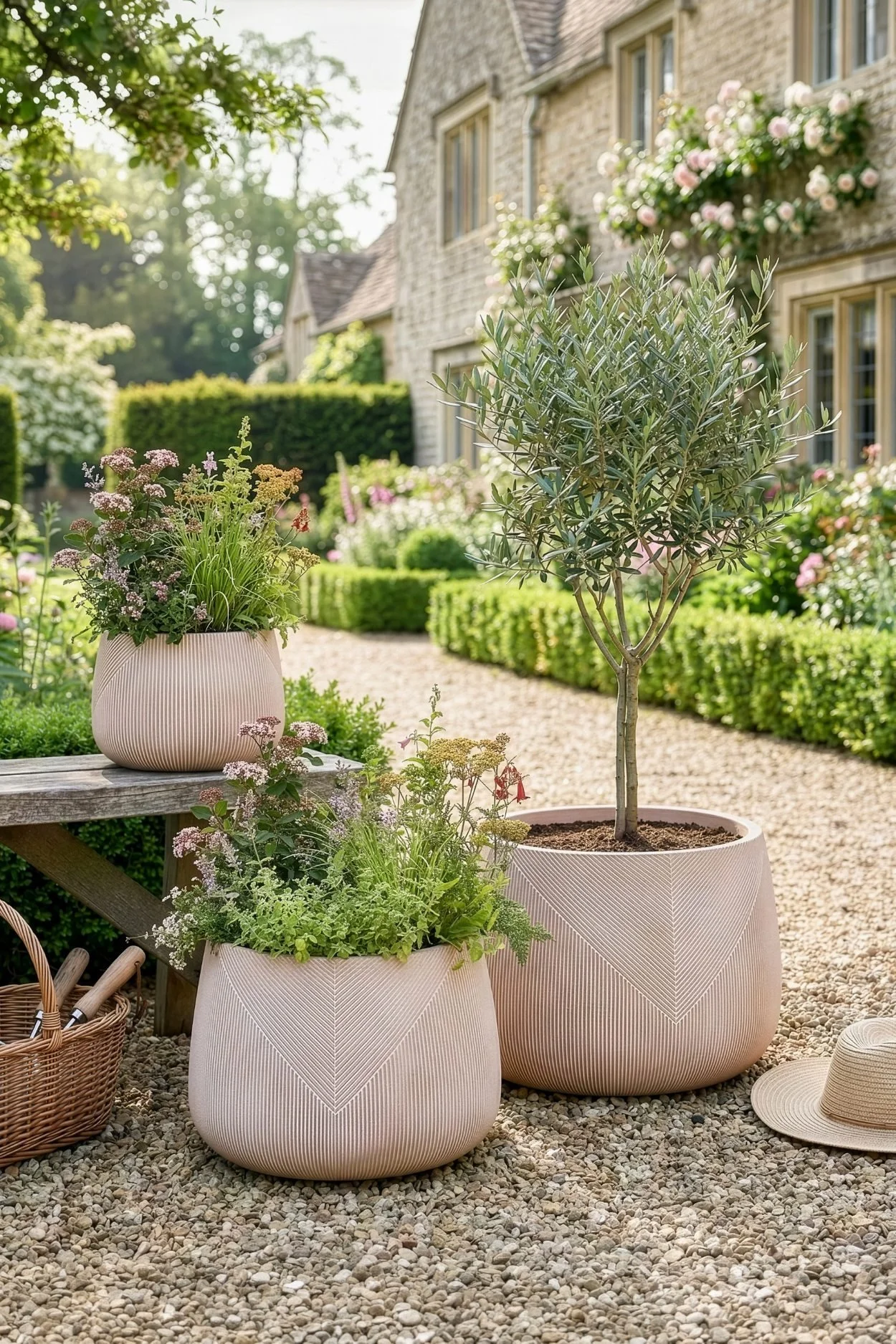
Photo credit: Dibor
When it comes to filling your pots and planters, there are so many options. What you choose depends on the size and whether you want a small tree, like the olive pictured here, herbs, shrubs or flowering plants.
What I particularly like about the three planters pictured here from Dibor is the combination of their ribbed finish, pale tone and rounded shape, together with the choice of plants. The olive gives height to the trio in the largest planter, while the two smaller pots are filled with a mixture of flowering plants, creating a balanced display.
If you have a standalone pot with a single-stemmed tree, you can also add plants around the stem. For real impact, trailing plants work best, including ivy and annuals such as petunias and lobelia, which spill over the edge beautifully. Here is a list
Shrubs: hydrangeas, agapanthus, azaleas, geraniums and roses
Bulbs and tubers: alliums, tulips, dahlias, daffodils, hyacinths and grape hyacinths
Herbs: lavender, rosemary, mint, sage and thyme
Small trees: olive trees, bay trees, eucalyptus and salix
Structural plants: cordylines, agaves, acers, palms, phormiums, grasses and ferns
Flowering perennials: salvia, echinacea, verbena osteospermums
Annuals: cosmos, marigolds, pansies, pelargoniums
Trailing varieties: petunias, lobelia, ivy, bacopa and trailing geraniums
Modern wooden pots and planters
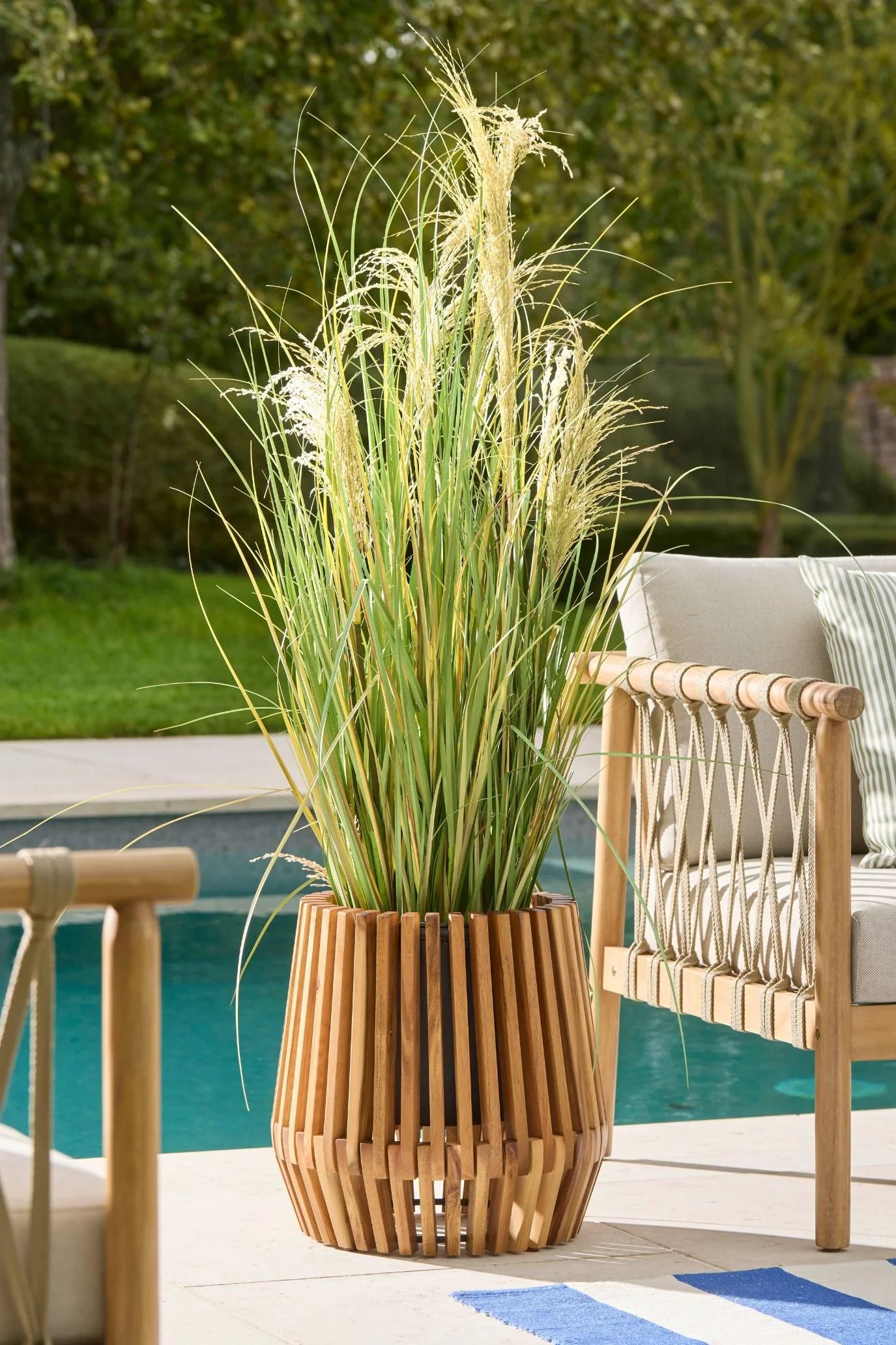
Photo credit: Cox & Cox
When we think of wooden planters, rectangular troughs or barrel containers often spring to mind - but think again. The latest designs are now reflect the same decorative details and texture as we see in our interiors, including fluting and slated details, like the Cox & Cox planter pictured here.
This wooden pot has a strong architectural feel and works particularly well on a terrace alongside wooden furniture. Its shape allows planting to take centre stage while adding gentle structure to patios, terraces or poolside settings.
Wooden pots are not as resilient as stone or plastic especially in wet climates due to rotting and cracking. Most now have added protection but its worth coating them with another protective sealant each year.
Different pot and planter shapes
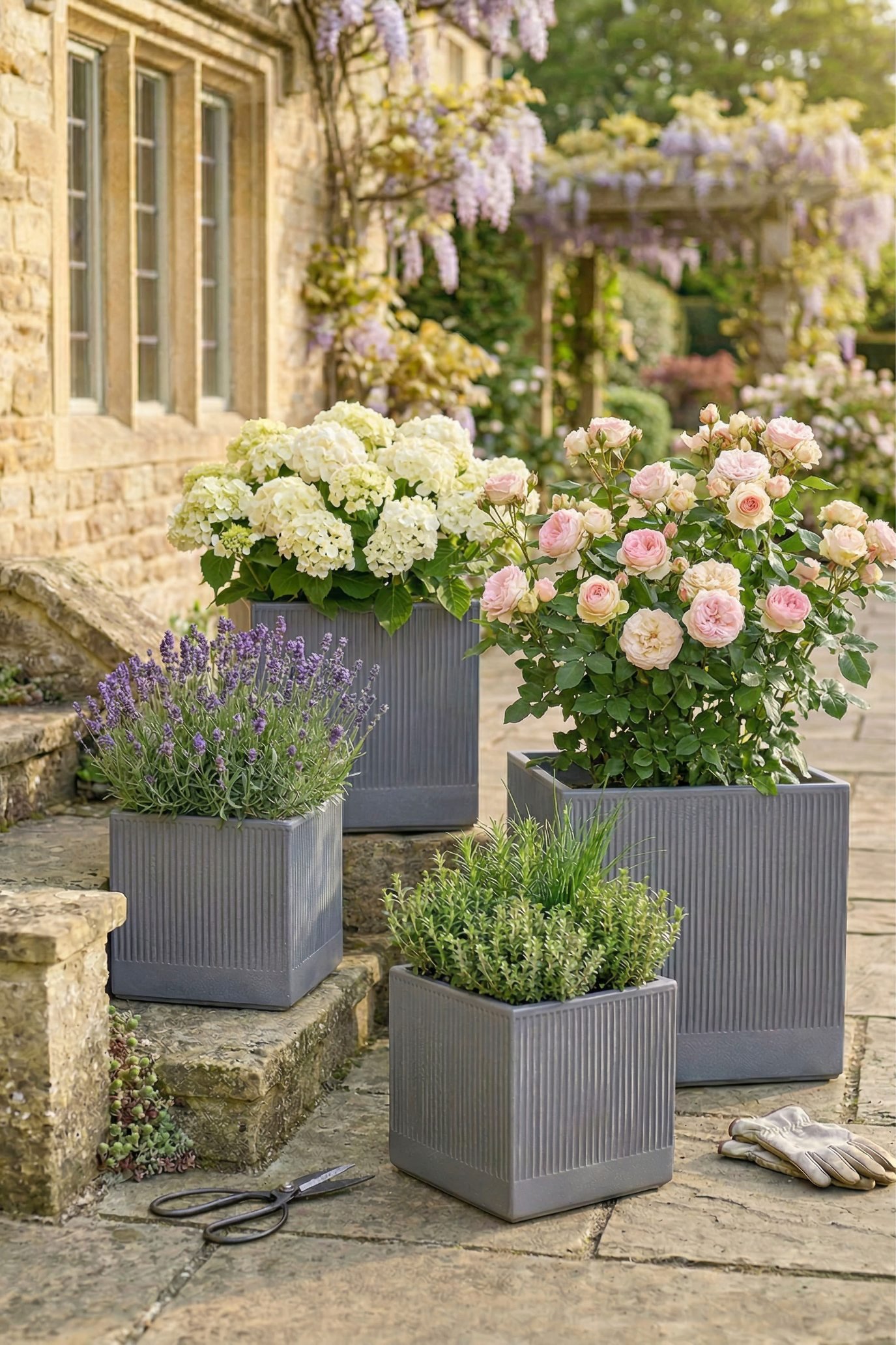
Photo credit: Dibor
Square pots became popular as a modern alternative to traditionally shaped planters. They look sleek and sophisticated, bringing a modern touch to your garden or entrance, like the graphite-grey ribbed designs pictured here by Dibor. Although they resemble solid stone, they are crafted from fibreclay, which is a lightweight and more durable alternative to traditional earthenware planters that still has a similar appearance.
I must admit I generally prefer more organic shapes, but having said that, my most recent purchase was four square pots for my entryway. The surrounding walls are curved, so the square planters really stand out and look far more attractive than the round ones I had there previously. The contrast makes more of a statement. On the other hand, round or more organically shaped planters can help soften harsh lines and bring a less formal and more relaxed feel to an outdoor area. Before you make a purchase, it’s worth looking carefully at the shape of the area you plan to place your pots, considering what would work best. Here is a list to give you an idea of some of the different-shaped pots available:
Round pots - work in almost any setting.
Tall planters - ideal for entrances.
Square and rectangular - structured for traditional or contemporary settings.
Troughs - rectangular planters for stands or window boxes.
Urns and pedestal planters - ideal for formal or larger gardens.
Wide and shallow bowl planters - work well on outdoor tables.
Wall-hung pots and hanging baskets - for walls, fences or entrances.
Oversized planters - for large shrubs and small trees on large terraces and patios or beside a pool.
Self-watering outdoor pots and planters
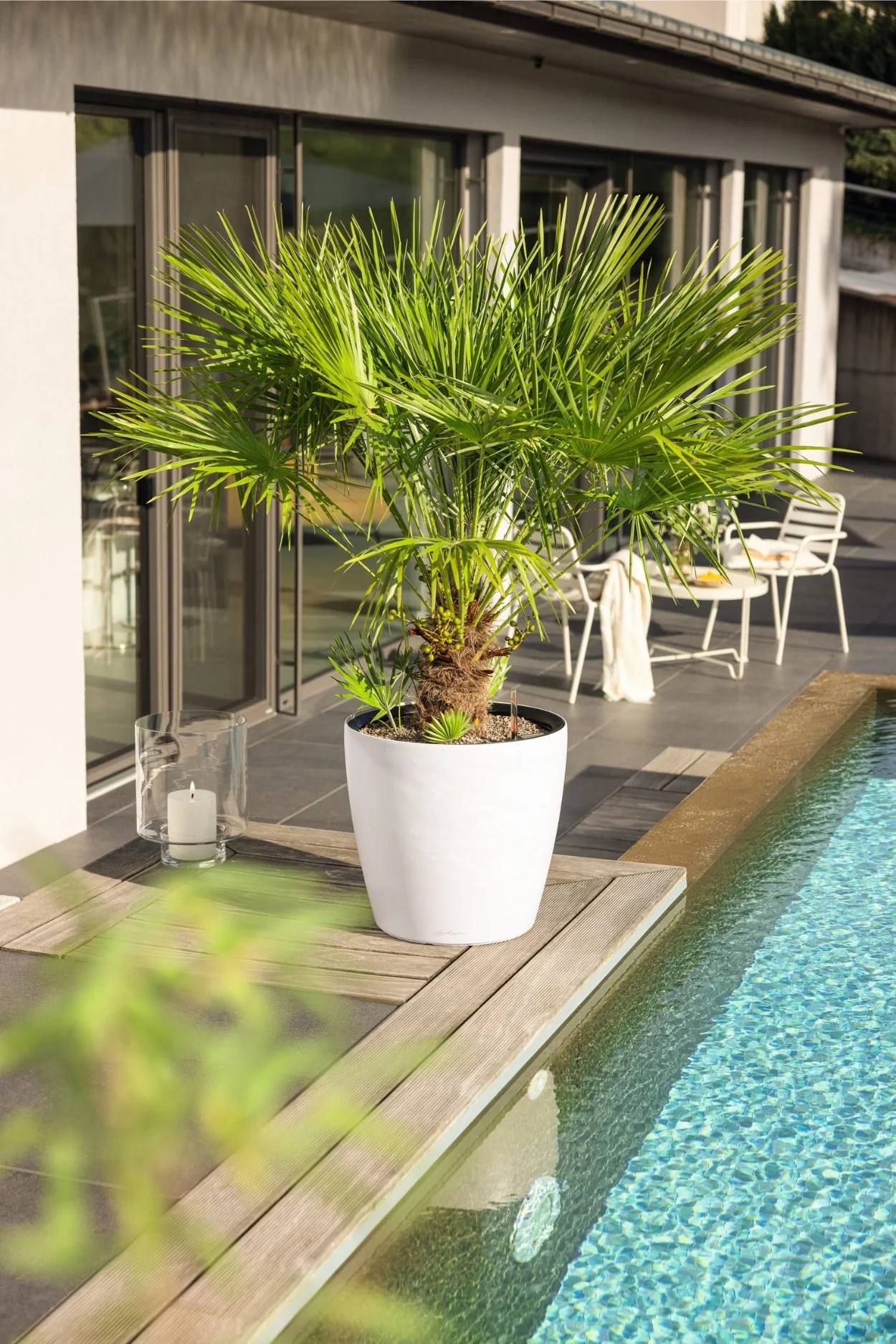
Photo credit: Lechuza
Self-watering posts are a genius idea and are ideal if you are away a lot or don’t have time to water. Watering in the height of summer is time-consuming so what could be better than having a pot that does it for you?
My son has a few of these for indoor plants in his flat in London and the plants are thriving. The roots drink water on demand, which means plants are healthier and there is no risk of overwatering. This container by Lechuza is equipped with a separating bottom, water reservoir and water level indicator, which helps to prevent water logging and includes a planting substrate serves that as a drainage layer.
Grouping outdoor planters in a trio
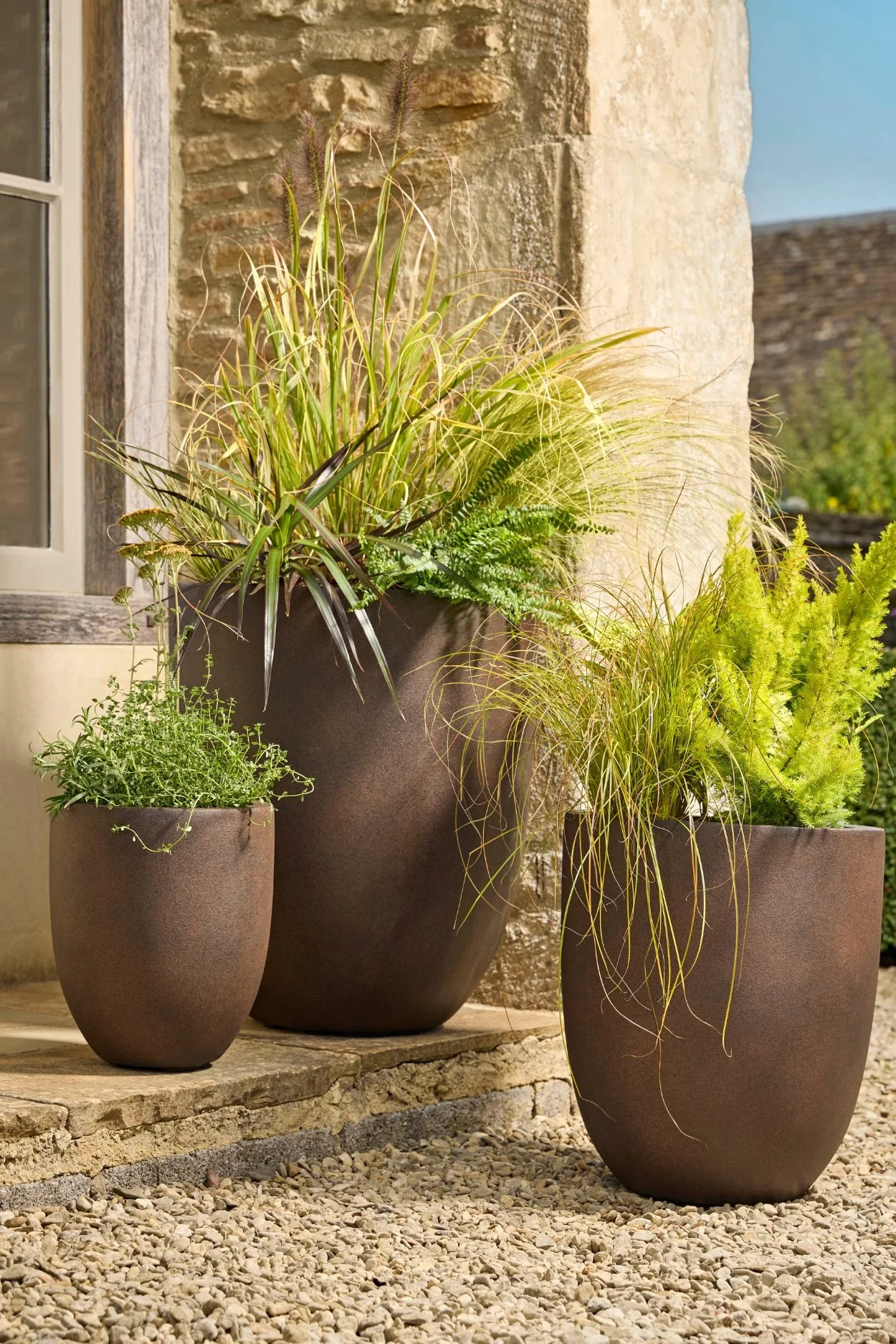
Photo credit: Cox & Cox
Modern pots and planters creatively positioned and styled on a terrace in a group create a wonderful biophilic connection between your house and garden. A trio works particularly well, as it feels balanced, considered and stylish.
If you are planning to group three, ideally choose different sizes to create a variation in height. Two can be the same size, but the height of the planting should be different. For example, you could use a tree or tall structural plant, such as a cordyline or palm in one planter, with shorter foliage or flowering plants in the other.
The three planters here from Cox & Cox have an aged rust-toned finish and sculptural tapered shape, so they would work beautifully on both traditional or contemporary terraces. The two larger pots have been planted mainly with ferns and grasses for foliage, creating different textures, movement and greenery all year round.
Basket planters for a natural country-style look
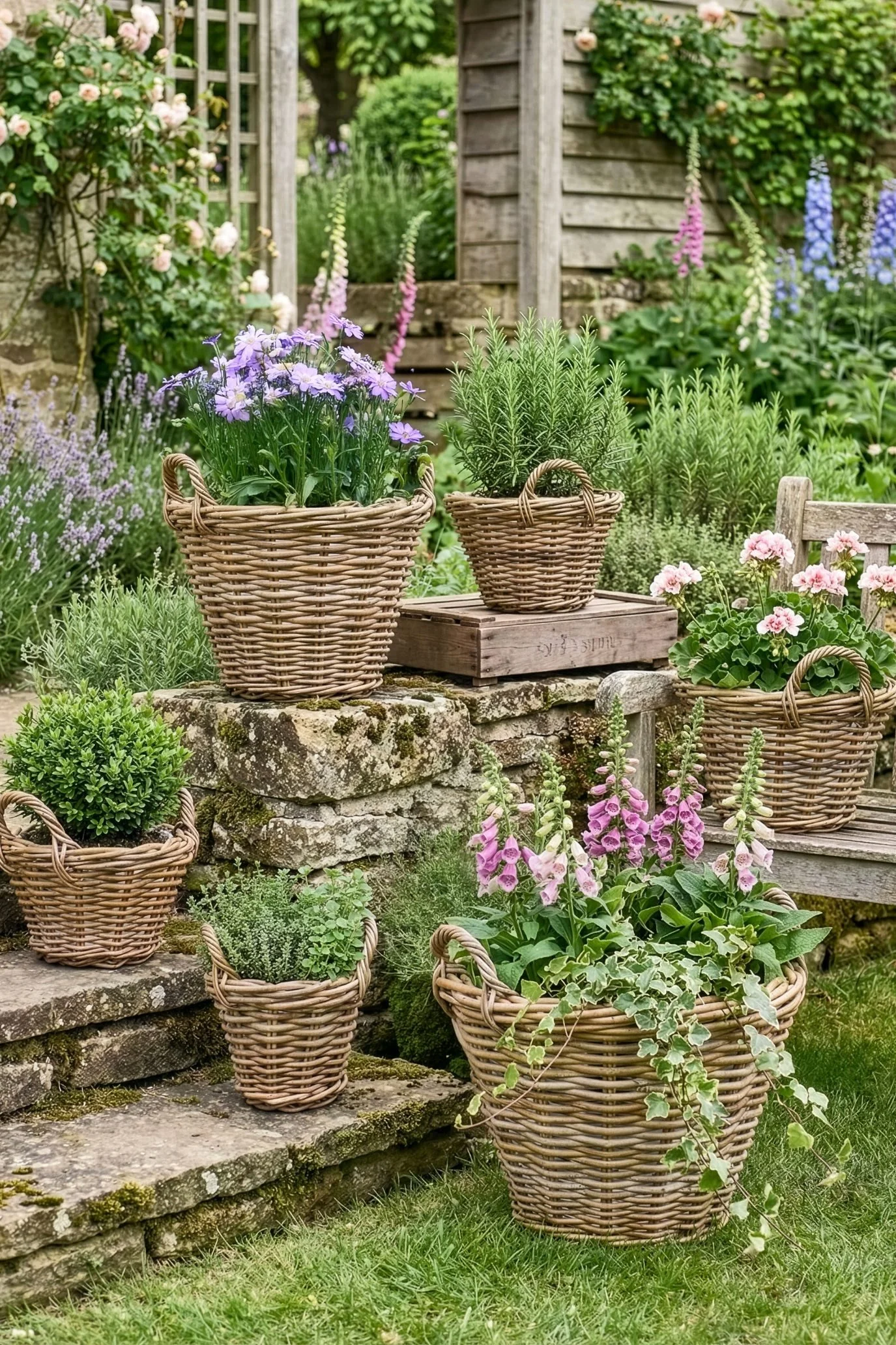
Photo credit: Dibor
Baskets bring that relaxed country style to a garden or terrace collection, perfect for adding rustic character to any outdoor space. Made from natural rattan, the baskets pictured here from Dibor come in six different sizes and have handles, making them easier to carry and reposition around your garden or terrace.
To prevent water from leaking through and leaving marks on stone paving or decking, many baskets come with a watertight plastic liner. Depending on your climate, I would consider bringing them indoors during the winter months. The bonus is that they work beautifully with indoor plants too.
Oversized pots and planters for bigger shrubs and trees
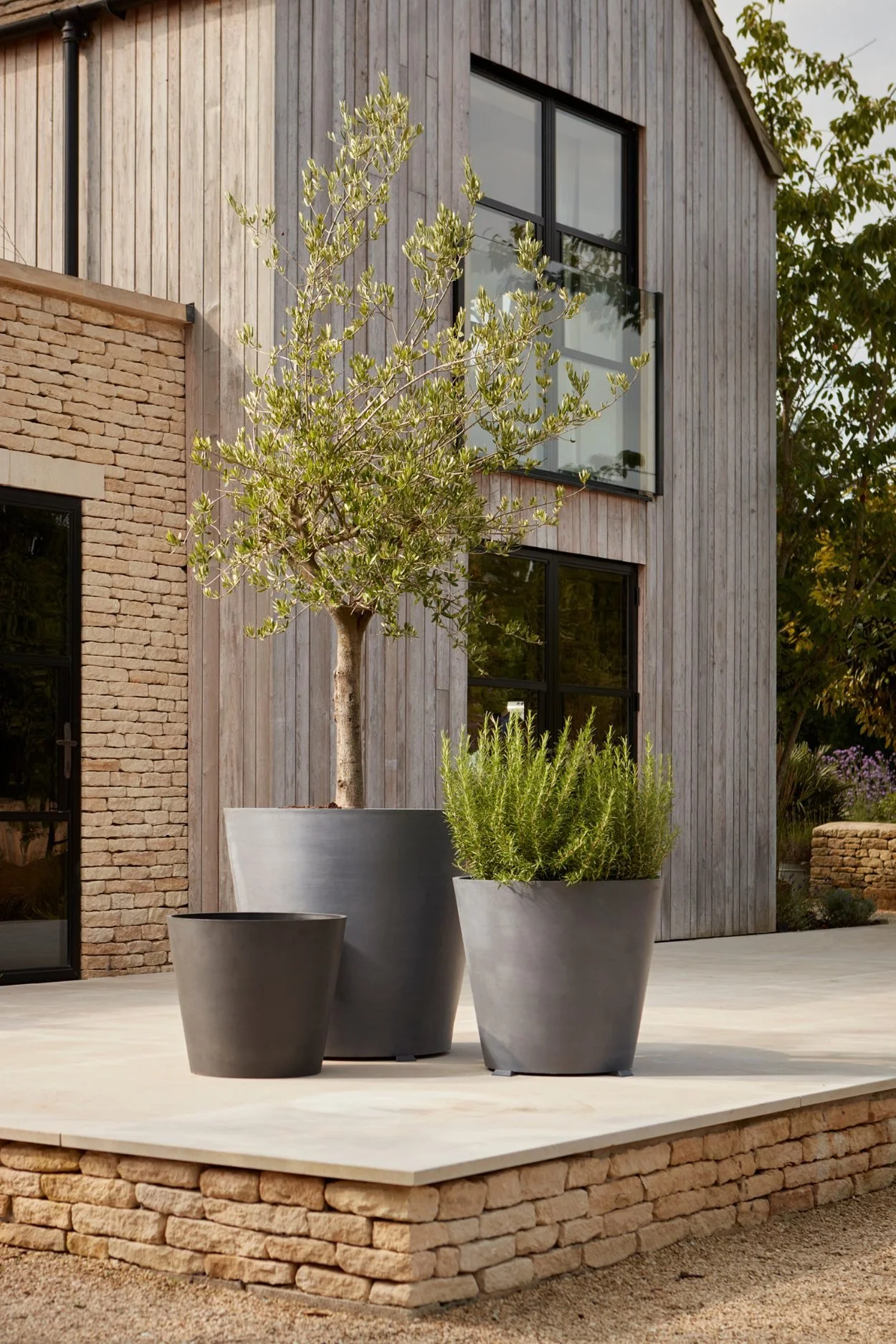
Photo credit: Gardenesque
I always found it difficult to find a planter big enough for my ancient olive tree. I ended up using a barrel planter, which was the right size but not quite the look I wanted for a contemporary terrace. Later, I found a company that made oversized plastic planters in a wide range of colours and chose a dark grey design for the olive tree.
When I decided to introduce more white into the garden, I bought a large white planter for my cordyline tree and styled it beside two pebble-shaped solar lights in different sizes. These eco-friendly planters are designed in Belgium and made from recycled plastic. They also feature discreet hidden wheels for hassle-free positioning. This is ideal if, like me, you change your mind and want to move your plant to another spot in the garden.
Metal planters and pot
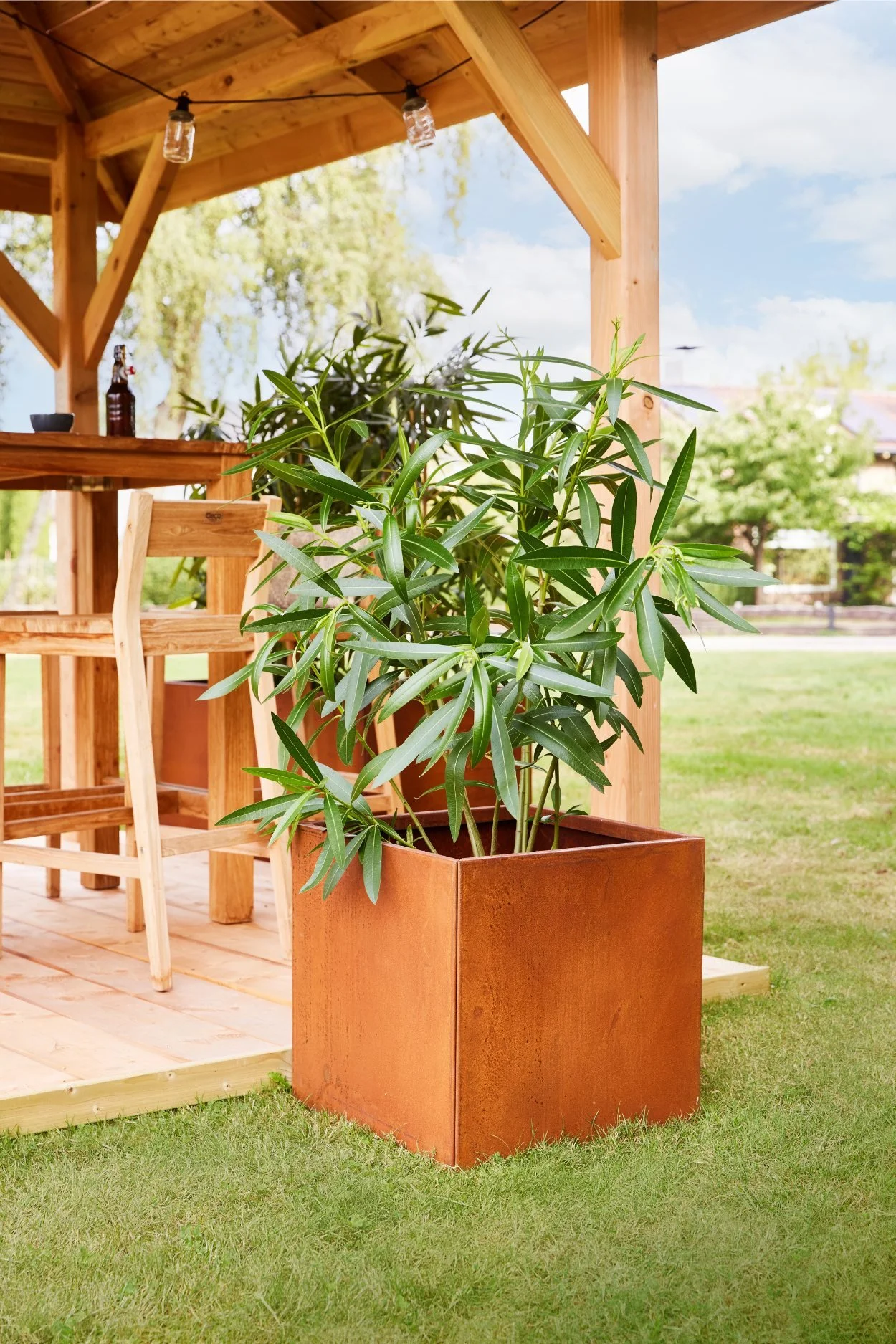
Photo credit: Tuin
Metal pots have always been popular, not least because they often develop a more beautiful patina over time, giving them character and charm. Pictured above is a planter from Tuin made from Corten steel, a material which is increasingly used in modern architecture and garden design. It starts out grey but, as it weathers, it transforms into a rich rust-coloured finish which looks striking against greenery. Here are some other popular types of metal planters:
Aluminium planters - modern, sleek and lightweight, so easy to move and more resistant to rust due to their powder-coating.
Copper - gradually develops a beautiful greenish/blue patina over time and has a more decorative rustic look.
Zinc - develops a soft grey patina over time and a slightly mottled finish.
Cast-iron planters - are extremely sturdy and often used for classical urns and pedestals.
Galvanised steel - has a protective zinc coating that makes it resistant to rust and gives it either an industrial or traditional farmhouse look.
Stainless steel - offers a sleeker finish and is extremely durable, although it tends to be more expensive.
Planters on pedestals for added drama
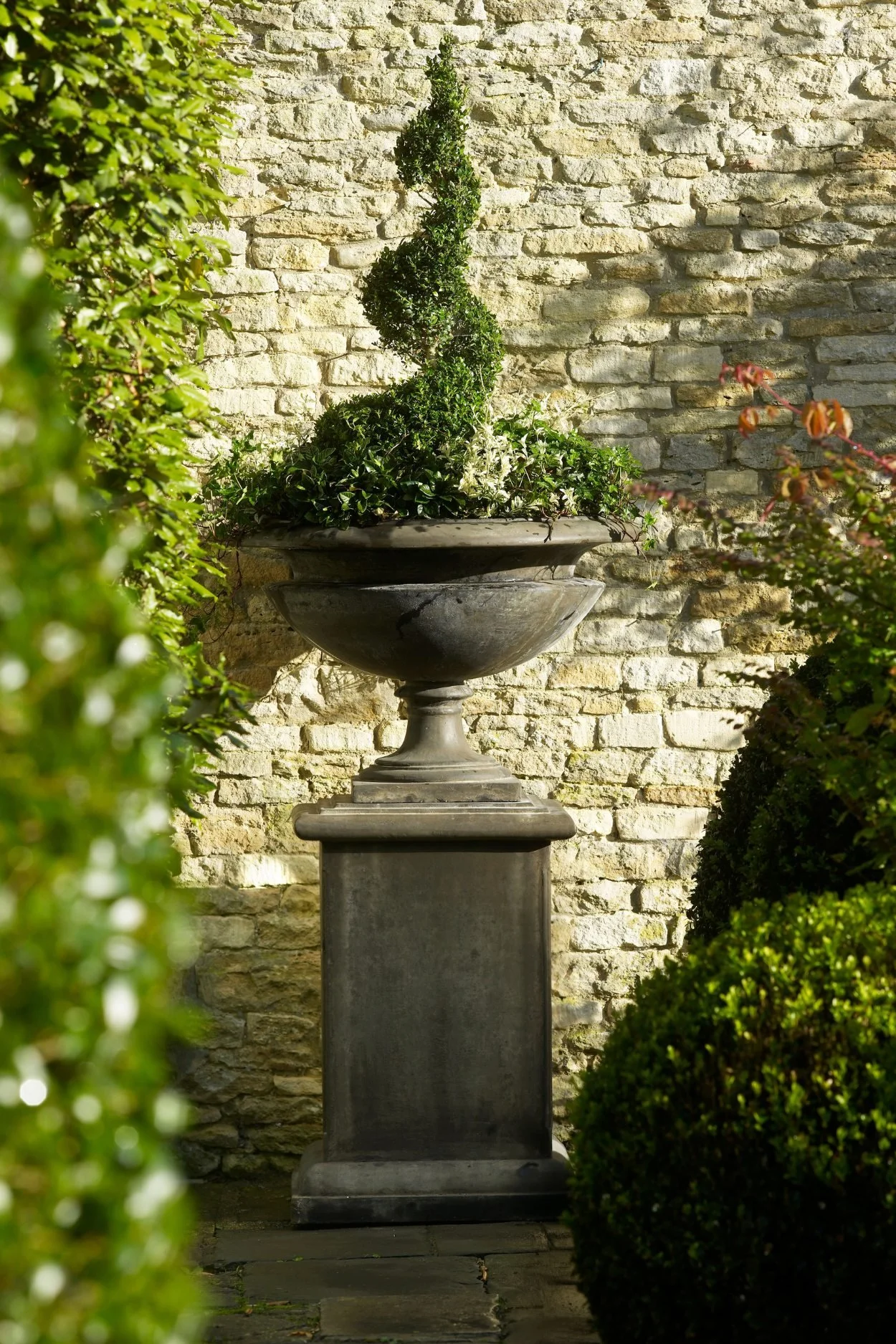
Photo credit: Bramblecrest
Pedestals, or plinths as they are also known, have become increasingly popular in interiors to give a vase, lamp or pot extra height and turn it into a key focal point in the room.
Traditionally seen in stately homes and more formal gardens, a pedestal topped with a planter can make a striking feature either on a terrace or positioned halfway down a lawn to break up a large expanse of grass. They almost become sculptures and you can plant them with anything from flowers and foliage to clipped topiary, like in the image here.
Inspired by ancient Italian bronze work, this model is by Bramblecrest from the Venetian collection, where they have recreated the look of an aged finish to create a real style statement. It has been planted with box topiary, combined with trailing ivy for a fuller, greener look. Unlike traditional stone pedestals, this design is made from fibreglass with cement so it is lighter and frost-resistant while still retaining a weathered patina.
Wall-mounted pots to enliven a plain wall or fence
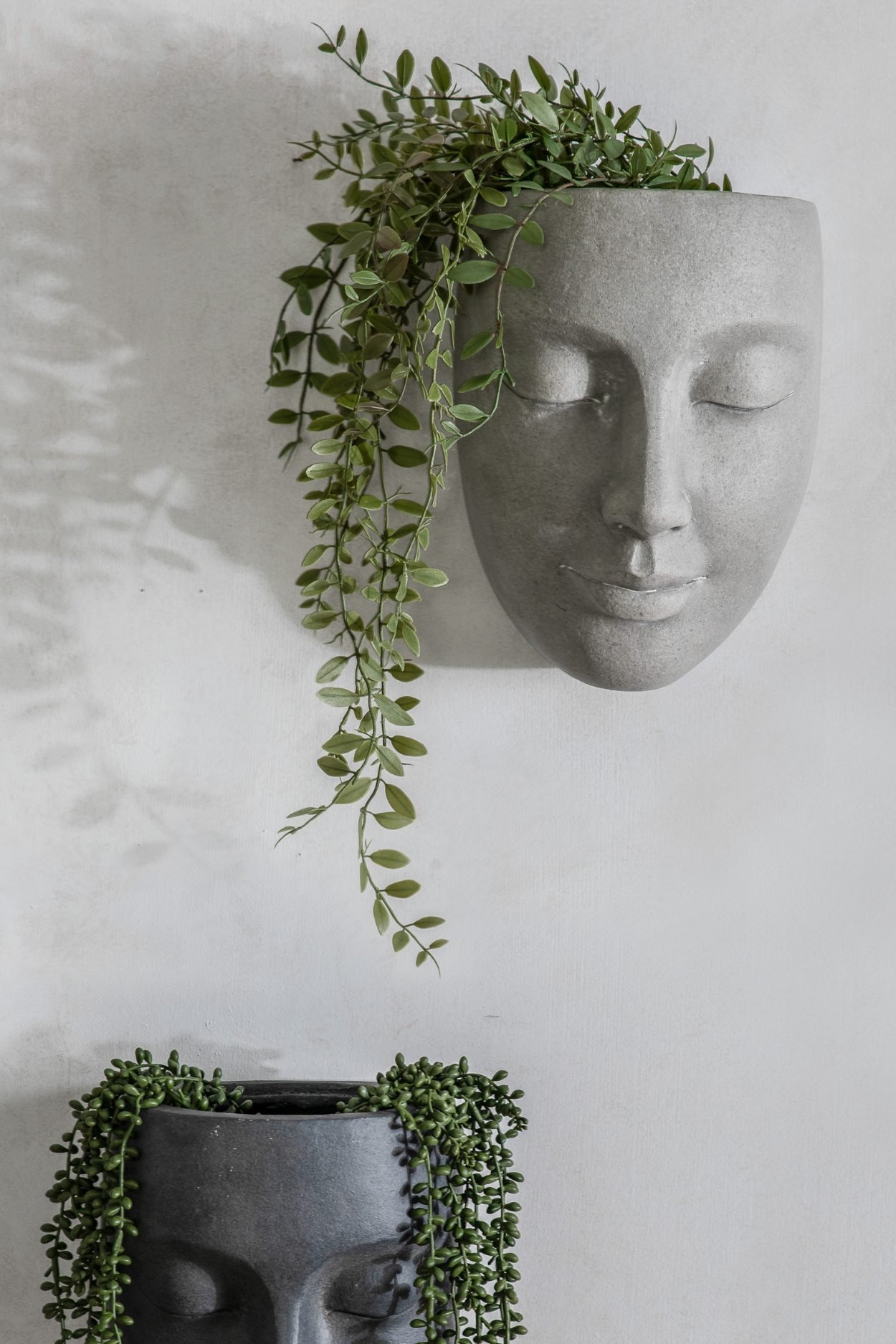
Photo credit: Wayfair
You can now add interest to an outdoor wall with everything from mirrors to a group of small sculptures, but I particularly love wall-mounted pots. They immediately catch the eye, elevate a plain wall and give you another opportunity to add more planting to your terrace, courtyard or balcony. I smiled when I came across these whimsical face planters. These wall-mounted designs are from Wayfair and will add style and interest to any wall both inside or outdoors.
I recently bought three terracotta wall pots by Nkuku for a large expanse of dark grey fencing. I have only one up, but I will add the other two at different heights, as arranging in odd numbers usually feels more balanced. They are positioned in a very windy spot, so I’m actually planning to put faux plants from IKEA in them, including one trailing plant.
Glazed coloured pots
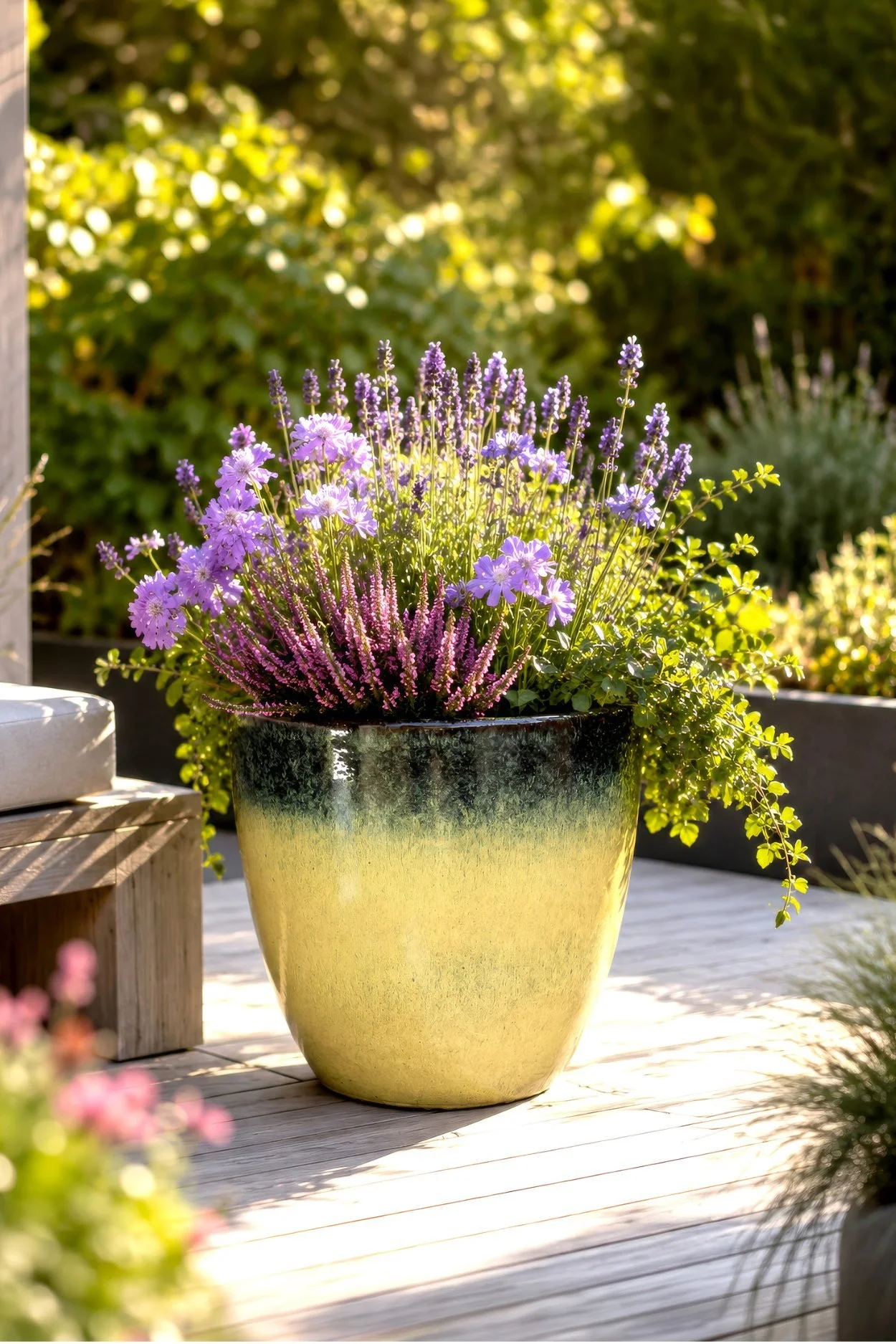
Photo credit: Mims Pottery
Finally, you can introduce colour through the pot or planter itself, as well as the flowers. Coloured pots are often made from plastic, ceramic or stoneware with glazed finishes that add shine and texture.
For a striking display, plant them with contrasting colours. The heather, lavender and purple scabious pictured here stand out beautifully against the yellow tones of the pot, creating a vibrant statement.
How to plant up a container
When choosing a pot or planter, ideally you want one complete with pre-drilled drainage holes as this will let any excess water out and prevent the plant from becoming waterlogged. While preparing your pot, give the plant a good soaking.
Before adding fresh soil to the pot, place some stones or broken pottery at the bottom, then add a little soil to cover the stones and pop your plant in. Place more soil around and to the level of the plant and give it a good watering. If it is fresh potting compost, it will be full of nutrients. If not, you may want to add a plant feed to give it the best possible chance to thrive.
LET’S SUM UP
I hope this article has given you ideas for outdoors pots an planters to help make your outdoor space as stylish as an indoor room. If you would like more general advice on creating an outdoor room, do head over to my feature: Outdoor Living Space Styling Ideas for Patios, Terraces and Gardens
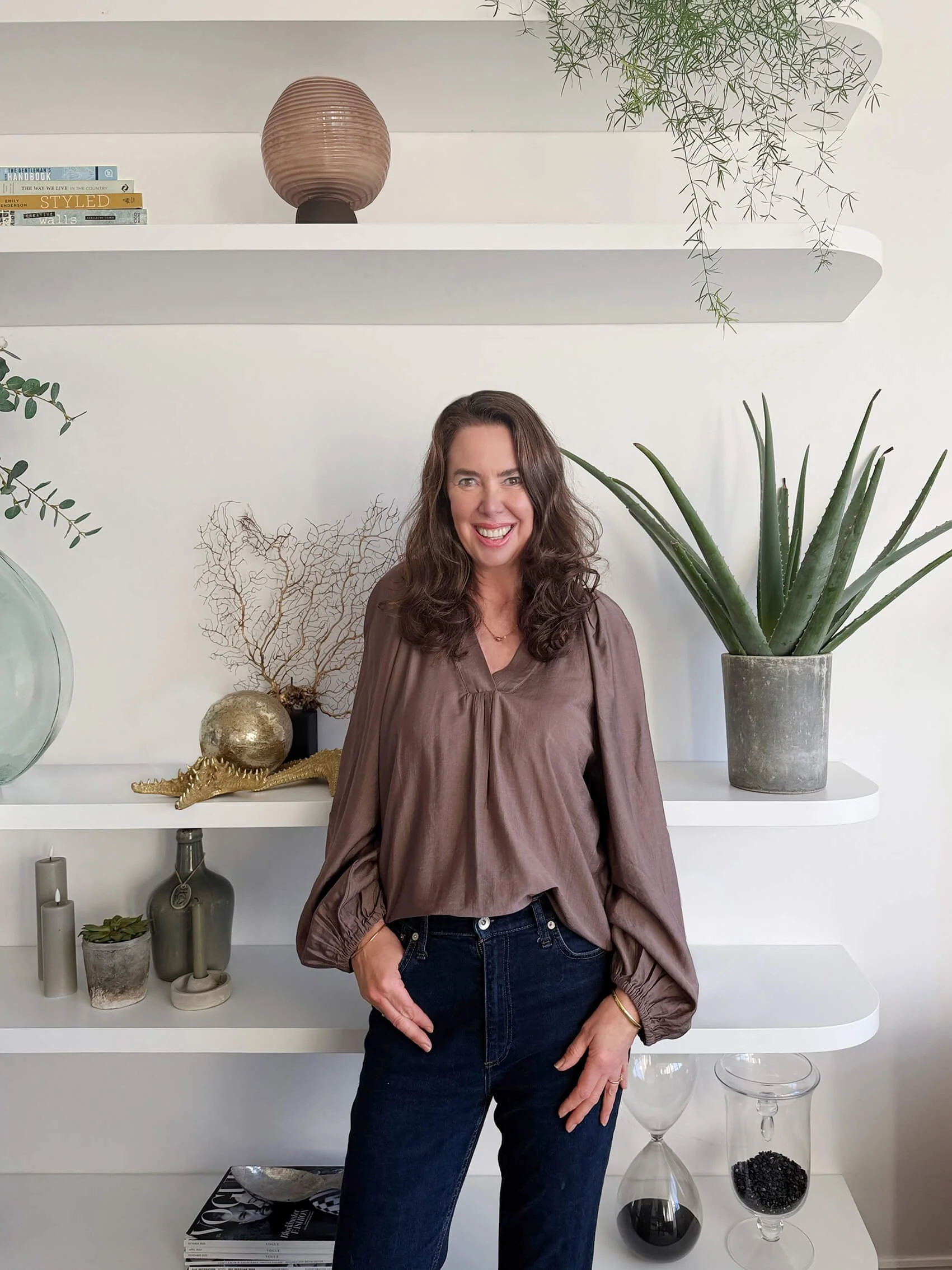
I’m Sandra, and this blog is about interior styling for real homes. If you love interiors and want your home to feel stylish, pulled together, yet still personal, you’ve come to the right place. I’ll be sharing styling advice to help you edit, layer, and finish your home with confidence, alongside articles on what’s happening in the interiors world — from design events and colour stories to features on interior gurus - so you get the full picture.
I also take you on tours of beautifully styled homes from around the world, offering inspiration and styling ideas to steal for your own space. Ultimately, I’ll show you how a little bit of styling can be transformational and take your home to a whole new level.
If you’d like to find out more about me click here