Photography by Nathan Wood / @nathanllwood courtesy of Claudia Dorsch
Back to the Future - The Chalet Reimagined
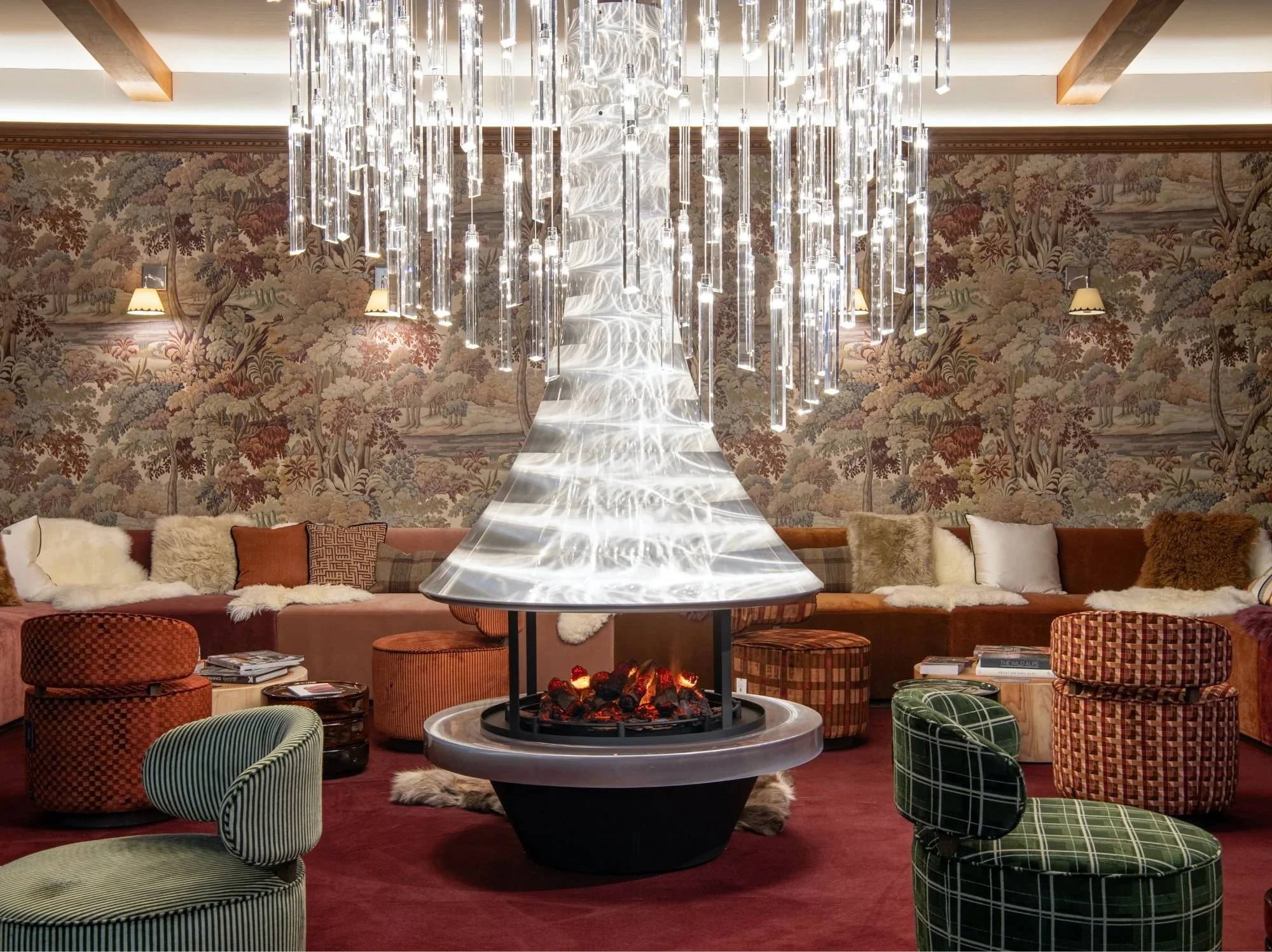
During my visit to Decorex, I was blown away by The Chalet. This was a fully realised Alpine retreat in the middle of an exhibition hall. From its tactile fur-lined entrance to a dramatic chandelier with icicle-like shards suspended above a fire pit, the space unfolded from the bar through several inviting seating areas to a mountain terrace complete with striped deckchairs, Melt pendant lights and a DJ playing cool sounds. I didn’t want to leave!
Designed by Claudia Dorsch for the Decorex 2026 VIP Lounge, The Chalet was an exceptional reinterpretation of Alpine style. With every imaginable detail considered, it was a feast for the eyes. But this was neither a recreation of a traditional chalet nor an interpretation of a typical luxury Alpine hotel. As Claudia explains: “One repeats history; the other ignores it. I wanted a third way: to understand the qualities that have always made these buildings extraordinary and let them evolve.”
Photography by Nathan Wood / @nathanllwood courtesy of Claudia Dorsch
More than a visual experience
I first met Claudia at the press launch of The Chalet, where she explained that she wanted to suggest the mountains and Alpine living without interpreting them too literally. She also designed the space to engage the senses. The lounge had another layer that photographs cannot capture: the Alpine scent, the sound of a fire crackling in the hearth and music coming from the terrace. As Claudia puts it, “You have to feel the room. You remember a room with your whole body, not only your eyes.” To fragrance The Chalet, she worked with The White Company to evoke the freshness of the mountain air and the smell of pine and resin.
When Decorex invited Claudia to design the VIP Lounge, she didn’t want an accumulation of chairs and sofas for visitors to rest between appointments - a space that was pleasant but would be quickly forgotten. “I wanted to build a real home, and I knew at once which type it should be. I chose a chalet because it’s the one kind of building that asks you to slow down. It invites conversation and rewards you for staying longer than you meant to. It holds you inside while you feel everything outside: timber under your hand, a fire at the centre of the room, the weather at the walls.”
Inspired by the glamour of a 1970s Alpine ski chalet, Claudia blended heritage with modern design. Familiar Alpine references appeared in unexpected ways, with traditional craftsmanship set beside contemporary engineering and natural materials expressed through new techniques. What I loved was seeing how all Claudia’s ideas had come to life. Read on to discover more about Claudia, her approach to design and her advice on bringing chalet style into your own home. Then join me on a tour of The Chalet to explore the details that made it so memorable.
Photography by Nathan Wood / @nathanllwood courtesy of Claudia Dorsch
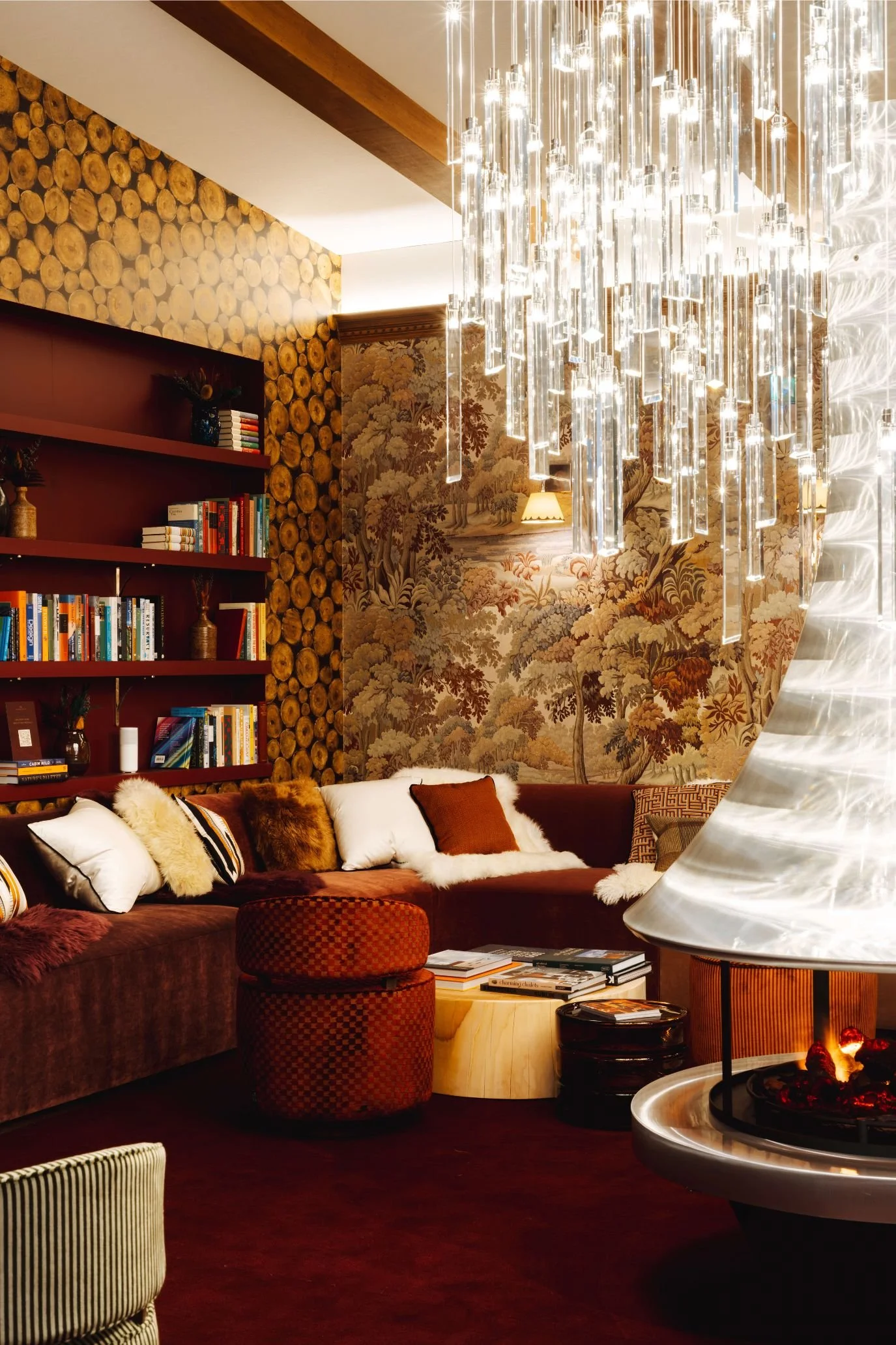
For the design of The Chalet, Claudia explained that every decision came back to one question: how can this space feel unmistakably Alpine without being predictable? The chandelier pictured here, the Vetta by Cameron Design House, is a perfect example. Its icicle-like shards offer an abstract reference to the mountains. Pictured above is a steel fire pit by Caleo, with the chandelier reflected in its metal surface, creating an ice-like pattern and a spectacular centrepiece. The lounge is cocooned by House of Hackney’s Plantasia woodland design wallcovering.
What is chalet style? Claudia’s perspective
I asked Claudia how she would describe chalet style and how we can bring some of its warmth and character into our own homes.
“For me, chalet style is defined by warmth, authenticity and a connection to the surrounding landscape. Traditionally, Alpine chalets were built from local timber and stone, using natural materials and craftsmanship to create shelter from the mountain climate. This has given chalet interiors their distinctive character: exposed wood, tactile textures, natural stone, soft furnishings and, of course, the fireplace as the heart of the home.”
“But chalet style is about much more than a particular aesthetic. It represents a way of living. There is something wonderfully comforting about returning from a day in the mountains, gathering around the fire, sharing long meals with family and friends and enjoying the contrast between the dramatic landscape outside and the warmth within.”
Claudia’s advice on bringing chalet style into your home
Claudia believes that contemporary chalet design should preserve that sense of authenticity without being constrained by tradition. “You don’t need a mountain view to bring the warmth of a chalet into your home. The trick is to keep it warm but not heavy, luxurious but not ostentatious. Start with timber. I like working with reclaimed wood, which is ideal for flooring, furniture, and panelling. It carries history, so it feels lived-in rather than new. In kitchens, wood tiles maintain a continuous look while making cleaning easy. Then think about fire. Bioethanol and electric models allow for sculptural designs that don’t require complex installation, and freestanding stoves or suspended fireplaces add sculptural presence without visual heaviness, even in a contemporary apartment. In my own home, I use a brushed reclaimed limestone surround, and its rough rustic texture creates an inviting and grounded feeling. Against those harder surfaces, layer softness: bouclé, sheepskin, natural skins of different textures.”
Claudia deliberately mixed furniture styles, shapes and periods to give The Chalet a sense of having been collected over time: “Make sure your furniture is a mix of old and new; in a chalet, pieces were repaired, recovered in different fabrics, armchairs and dining chairs of different fabrics, shapes and periods in a mix of wood and upholstery. Art is important to bring atmosphere; select works which show the mountains, trees, animals, sky and snow. And finally, think beyond what you can see. Choose the scent of alpine air, pine and resin, rather than anything sweet and spiced. The contrast between old and new creates interiors that feel layered, sophisticated and personal rather than overly rustic or themed.”
Photography by Nathan Wood / @nathanllwood courtesy of Claudia Dorsch
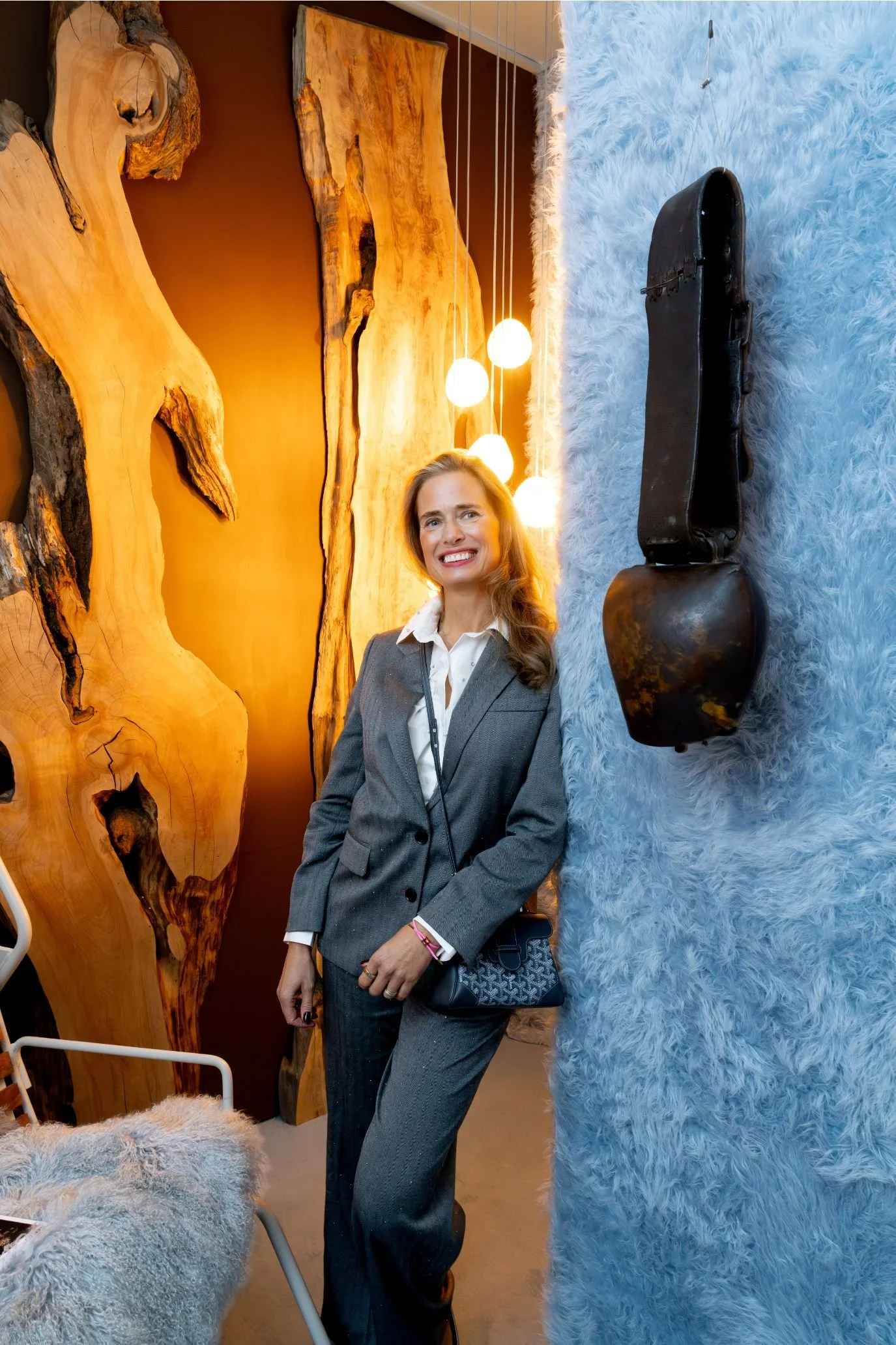
Over the past twenty years, Claudia has designed homes across London, the Alps and beyond. She describes each collaboration as another chapter in her growing library of knowledge. “This lounge is where much of that experience comes together,” explains Claudia. “Whether it’s a mountain, city or coastal home, I don’t begin with style. I begin with lifestyle. In the end, the success of an interior is not measured by how beautifully it photographs, but by how deeply it is remembered.”
“Mountain homes are built for more than one season, and the best of them feel equally right throughout the year,” Claudia continues. “The slopes are white in February and green in July; the light that reflects off fresh snow is not the light of a high-summer afternoon, and a home that ignores the difference has been designed for a mood, not a life.”
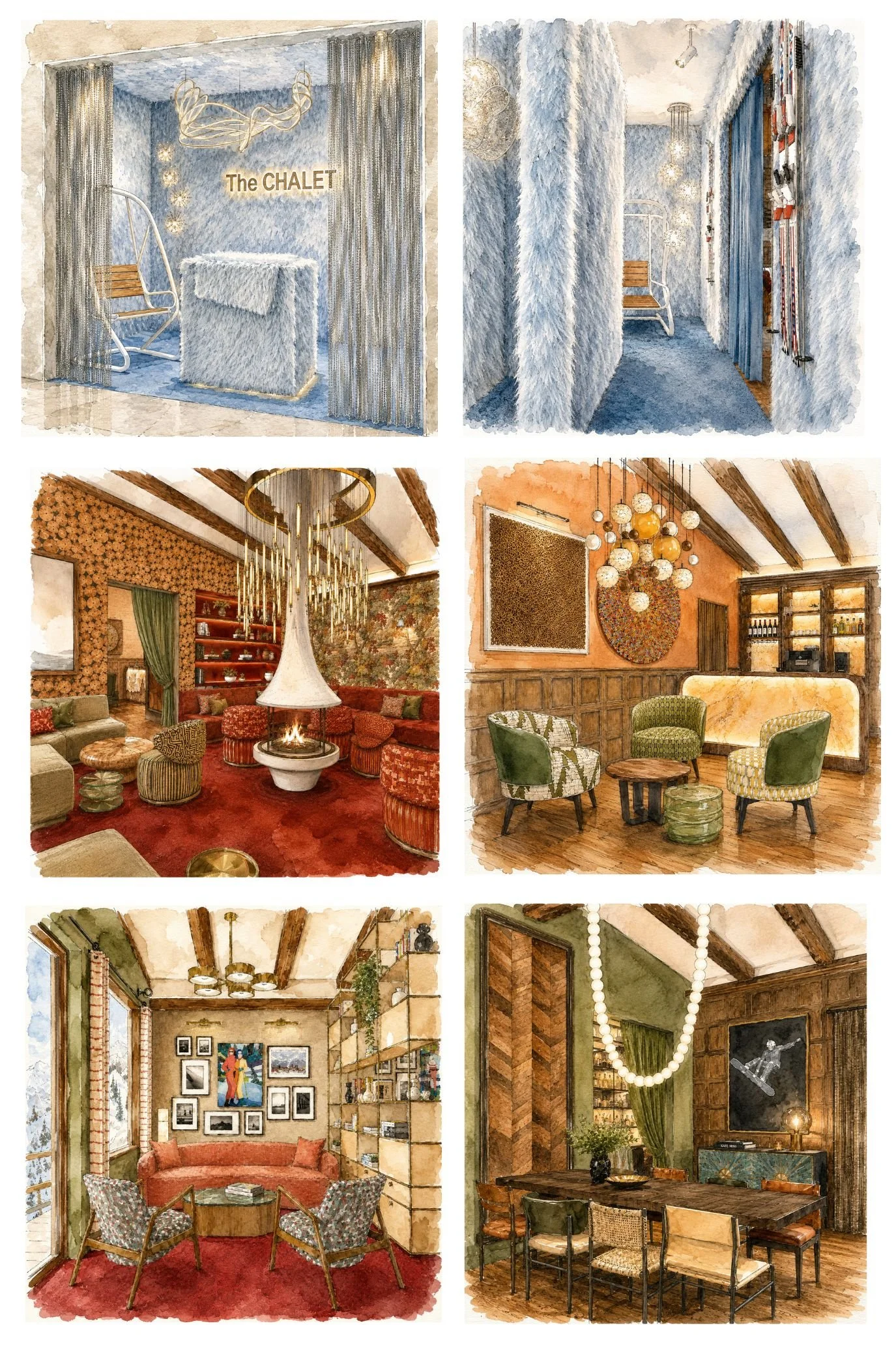
Photo credit: drawings courtesy of Claudia Dorsch
Above are some of Claudia’s drawings, which helped her visualise how she wanted The Chalet to look. But for Claudia, the most memorable interiors begin long before the first drawing. “They begin with curiosity - with travelling and with discovering extraordinary workshops tucked away in mountain villages and quiet industrial estates,” explains Claudia. “With conversations around a workbench, watching a craftsman shape timber by hand, or seeing a prototype emerge from a sketch.“
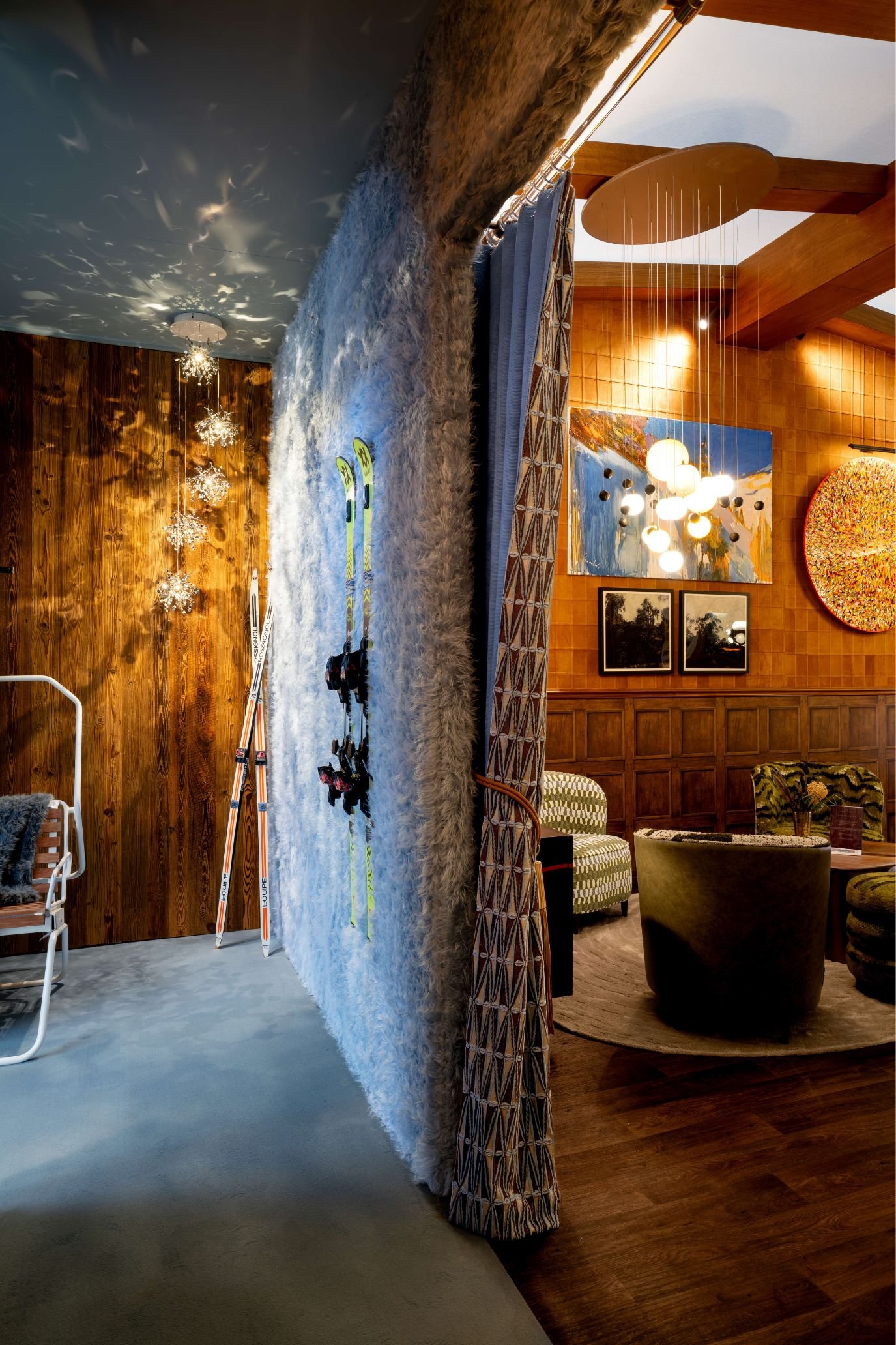
Photography by Nathan Wood / @nathanllwood courtesy of Claudia Dorsch
The fur-lined entrance, in a striking glacier blue tone, immediately evokes an Alpine setting, reinforced by a ski lift chair, icicle-like pendants and skis displayed against the wall. Step into the bar, pictured above and below, and the richness of the interior begins to unfold with a leather wallcovering from Arte and panelling-effect wallpaper from Andrew Martin. Many of the chairs were from Billiani, and I loved seeing textiles from one of my favourite fabric houses, Pierre Frey, paired with leather from Ben Whistler on the chair backs. My eyes were immediately drawn to the architecture, particularly the vast central timber beam running the length of the space, from the bar through the lounge to the terrace. Hanging from the beams, as you can see below, are spectacular Pilvi pendants by Cameron Design House. I also spotted a sideboard from Julian Chichester, while bespoke circular rugs by Ferreira Sá helped to zone the different seating areas, adding another layer of texture to the space.
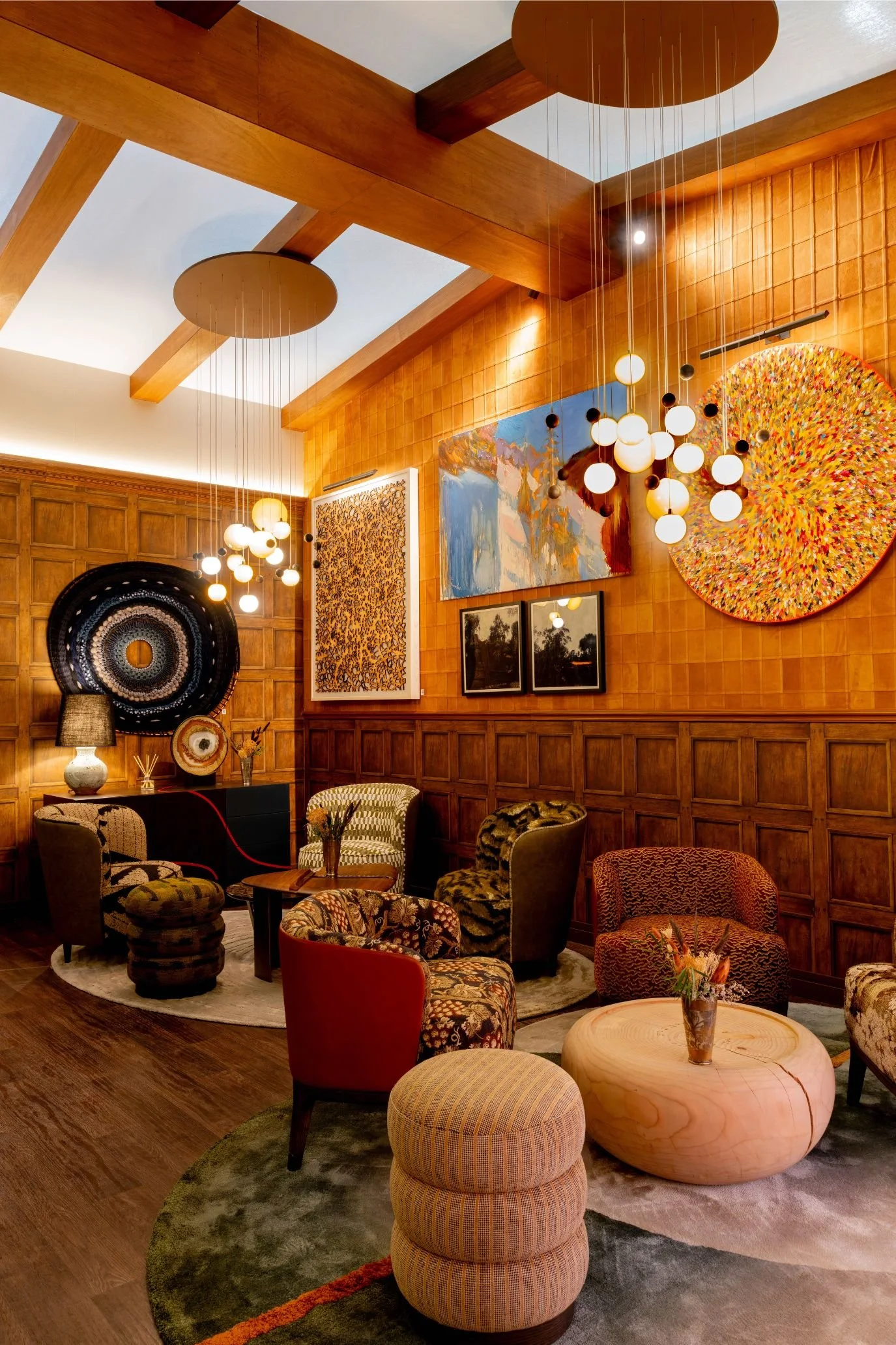
Photography by Nathan Wood / @nathanllwood courtesy of Claudia Dorsch
With so many design decisions to make across such a vast area, I was curious to know how Claudia had chosen the different elements, from wallcoverings to sofas, fabrics, rugs, lighting and artwork. She explained that every collaborator was invited because they brought something specific to The Chalet. “Some established authenticity. Some brought warmth. Some brought innovation. Some held on to heritage,” said Claudia. “Together they show something I have learned across two decades of designing homes. Beautiful interiors are never made by beautiful products alone. They are made by gathering the right people around one clear idea.”
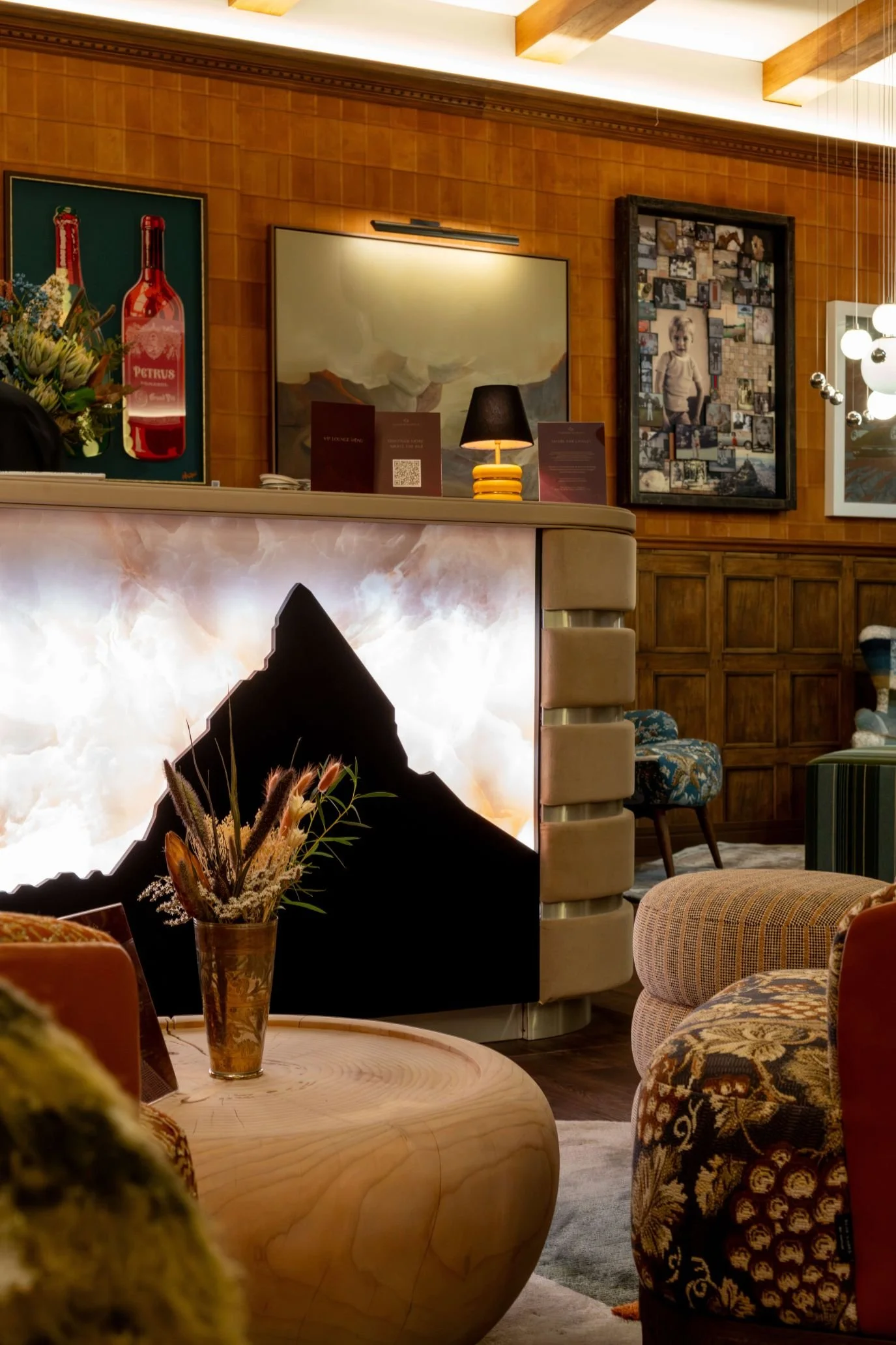
Photography by Nathan Wood / @nathanllwood courtesy of Claudia Dorsch
Flowers, foliage and plants are an integral part of an interior for me, so I was delighted to see them on display throughout The Chalet. Claudia shares my belief that flowers and plants also belong indoors, even when you are surrounded by them outside. To bring the colour and texture of a mountain meadow into the room, she used a curated mix of faux blooms, dried flowers and grasses from The Faux Flower Company, alongside fresh blooms from Flower Tart. One of the arrangements sat proudly on a table made from urban fallen trees by Hidden Gems. Also pictured here is the bar itself, which was a collaboration between several companies. With a mountain peak against softly backlit onyx, it made a striking focal point.
Photography by Nathan Wood / @nathanllwood courtesy of Claudia Dorsch
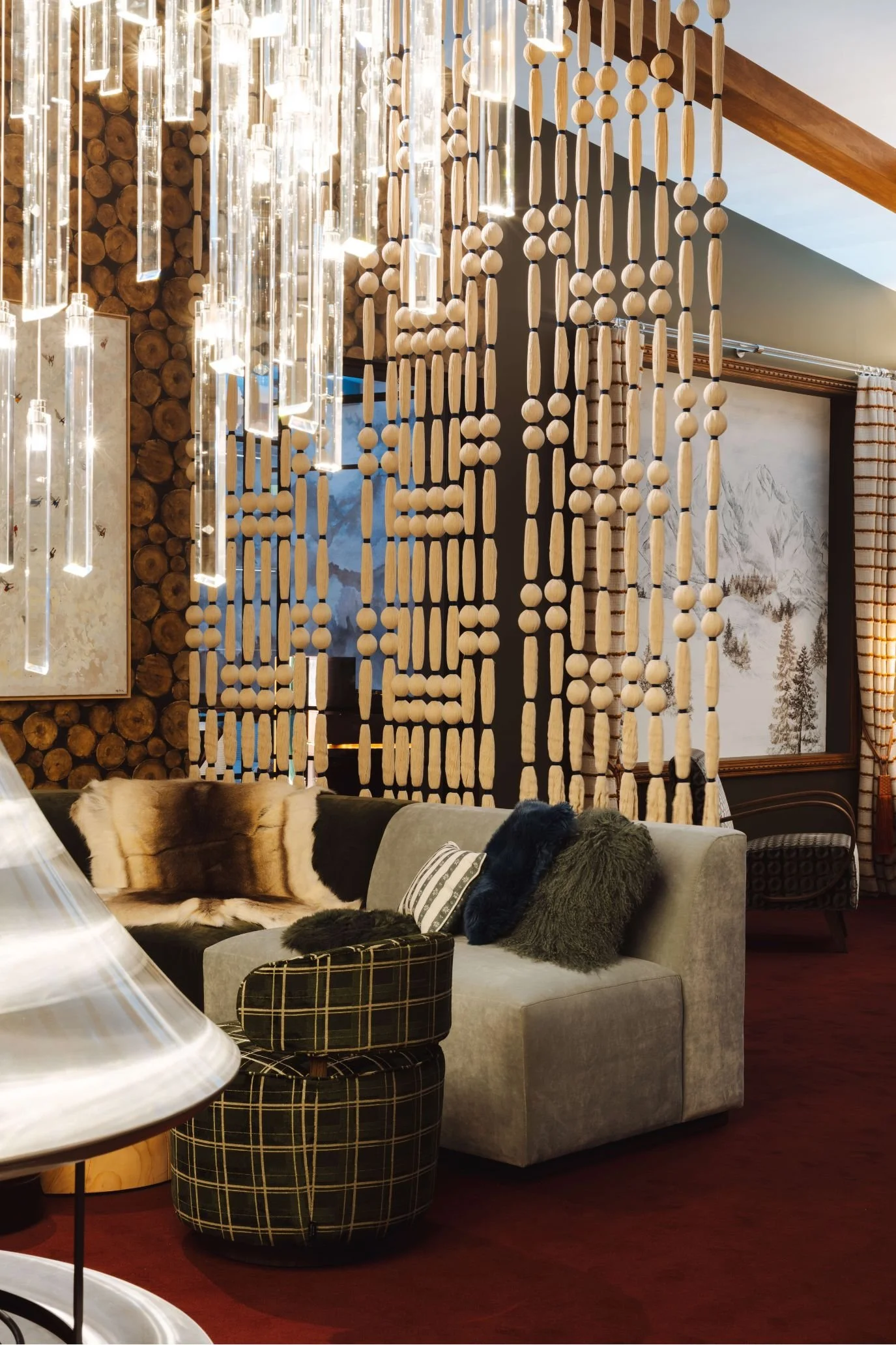
Texture was another essential part of The Chalet and Claudia explains how textiles make a room feel alive. “This is the softest, most tactile layer of the chalet: the fabrics, trimmings, curtains, upholstery and rugs that you experience almost instinctively, feeling them underfoot or against your hand before you have consciously registered them. I believe these finishing touches are essential in creating the warmth and comfort that define chalet living. The interplay of different textures, from sumptuous velvets and soft wool to beautifully woven linens and delicate passementerie - even lace - brings depth, richness and personality to an interior. Curtains soften the architecture, upholstery invites you to settle in, and carefully considered trimmings add subtle detail and craftsmanship. It is this layering of textures and finishes that transforms a beautiful space into a welcoming, deeply comfortable home.”
Photography by Nathan Wood / @nathanllwood courtesy of Claudia Dorsch
This had to be my favourite part of The Chalet, pictured above with its striking bobble curtain divider by Manufactori, which separated a part of the lounge from the rest of the space. I loved the tactile cushions in unexpectedly colourful shades, combining rich textures with a couple of prints to break up the plain fabrics. Fibre by Auskin supplied skins and furs, which I also like to style on my sofas alongside cushions and a throw. Claudia dressed the sofas and chairs with cashmere throws from Italian company Artigiani del Cashmere. A wool or cashmere throw brings both texture and warmth to a home and, as Claudia puts it: “It’s a reaffirming embrace you reach for the moment you sink into the sofa after a day outdoors, and adds not only colour and texture but an extra layer of warmth.”
Photography by Nathan Wood / @nathanllwood courtesy of Claudia Dorsch
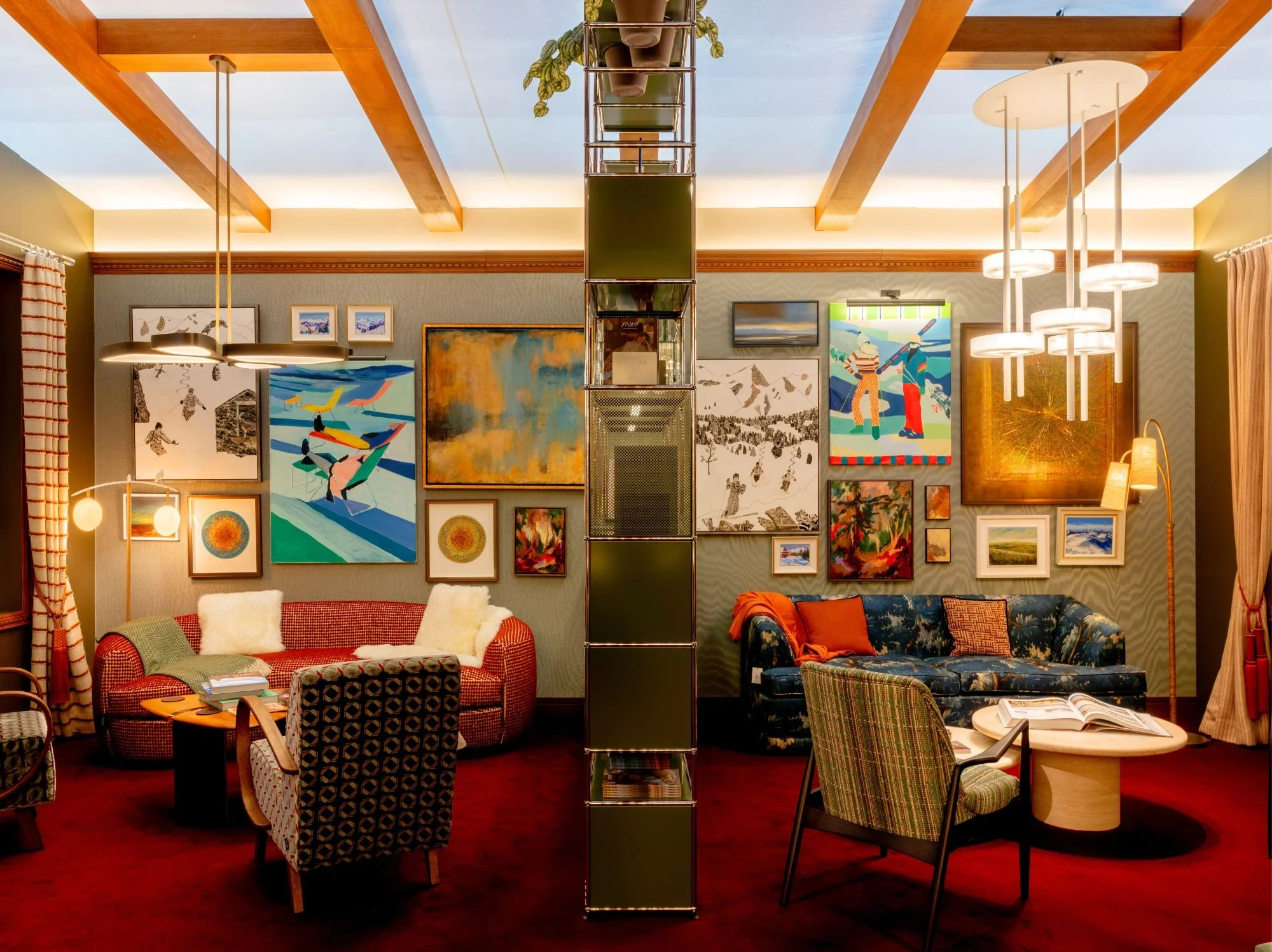
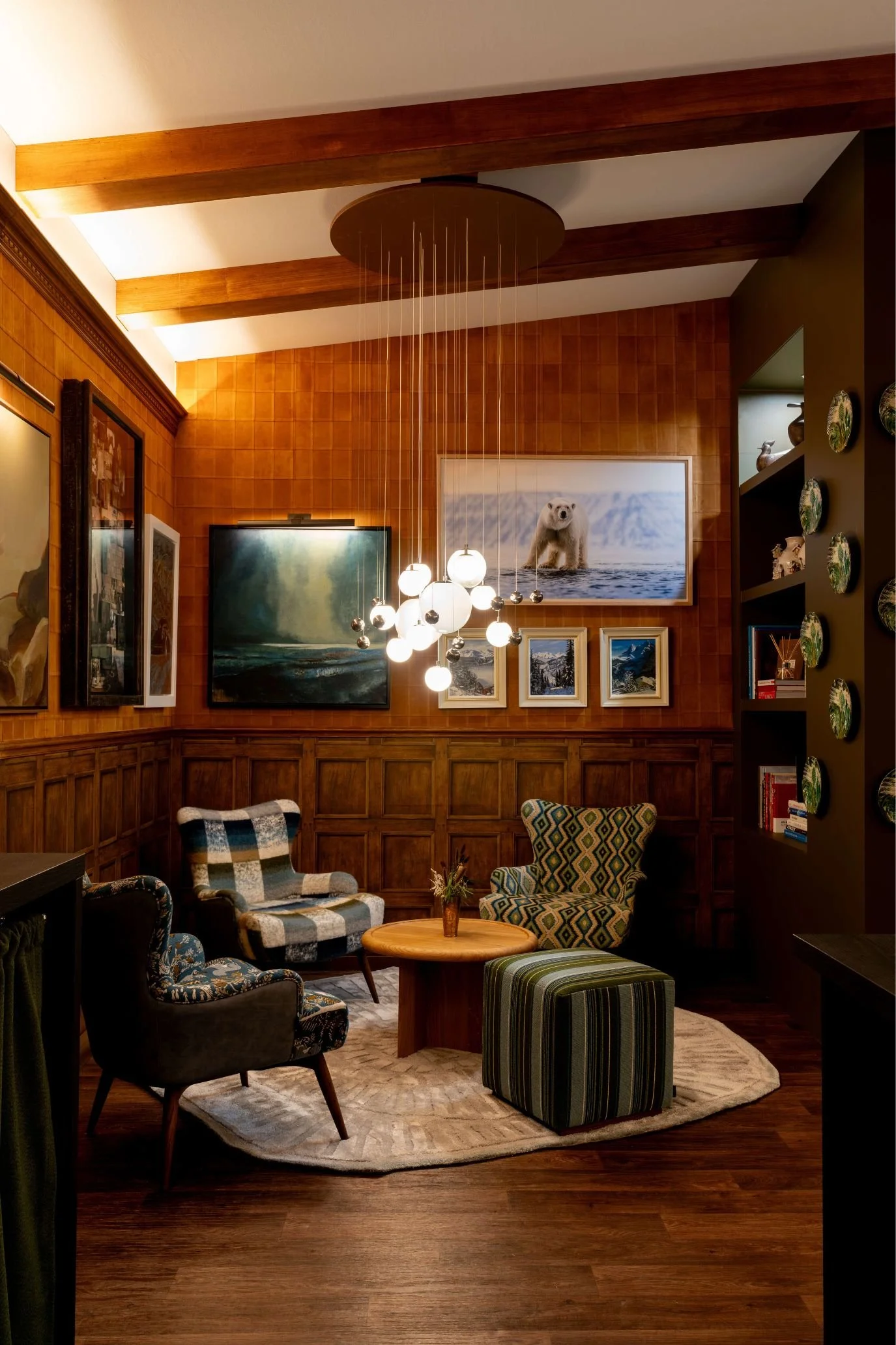
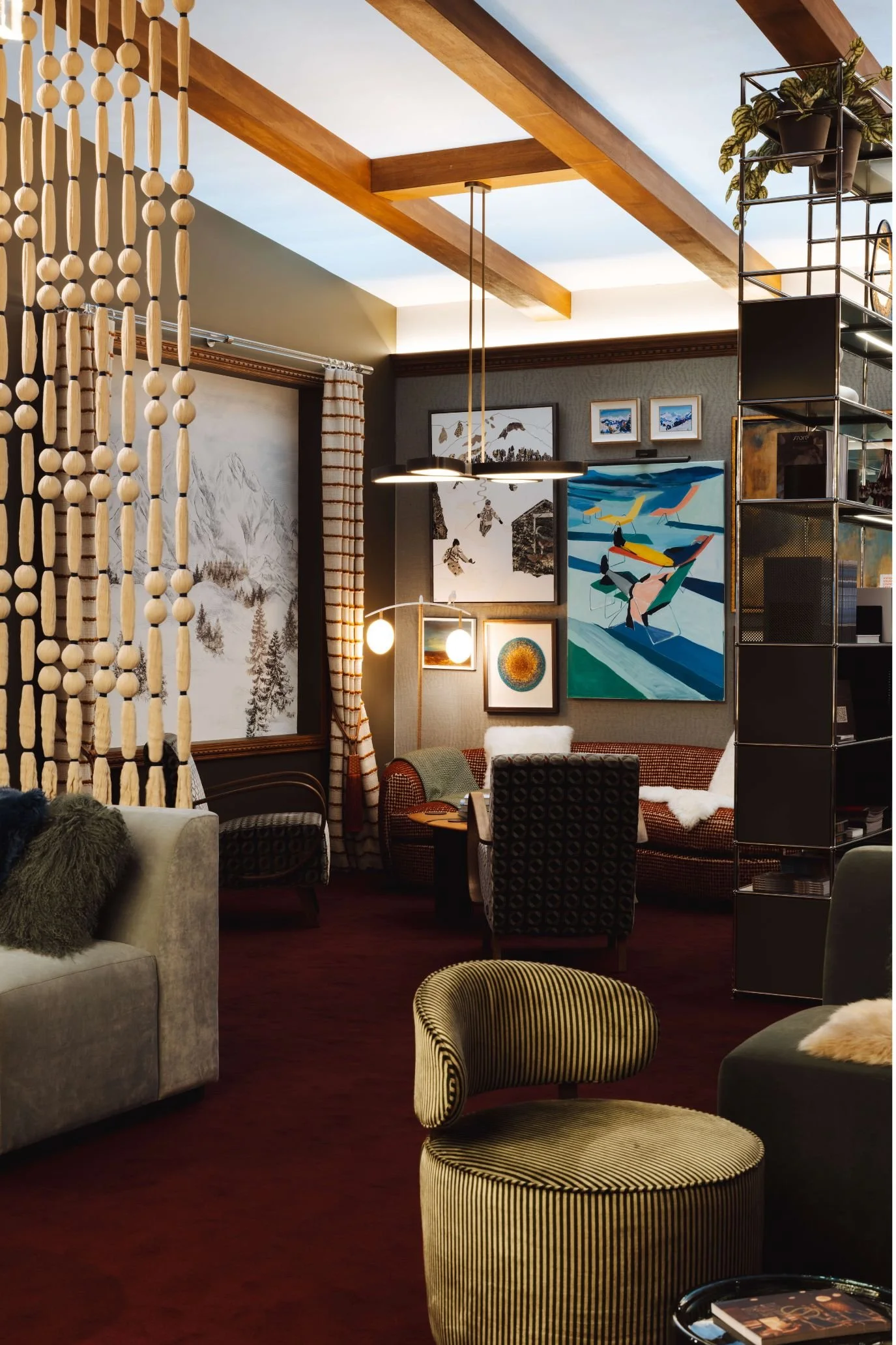
Art was an essential part of The Chalet with an eclectic mix of paintings and photographs of polar bears, snowy scenes, skiers on the slopes or relaxing on terraces, as well as a collage of family snaps. These Alpine references helped tell the story of the space. Mixing media and sizes gives a display a more curated feel and, even in a scheme where wallcoverings and cladding feature on many of the walls, there is still room for art both hung the walls and propped up on shelves. Many of the works were created especially for The Chalet, with Nadia Waterfield Fine Art and 99 Projects helping to commission new pieces. Claudia sourced others, including the vintage black-and-white prints.
Rather than solid walls, Claudia favoured partitions that allowed the light to pass through, including the modular metal shelving system by USM, pictured above. It was styled with books, plants and decorative pieces that echoed the Alpine theme. The mountain view was a hand-drawn design by Mural Concept and framed by curtains made by Danesbridge, using Dedar fabric. Gorgeous tiebacks from Houlès added another thoughtful finishing touch to give the scheme another layer of detail.
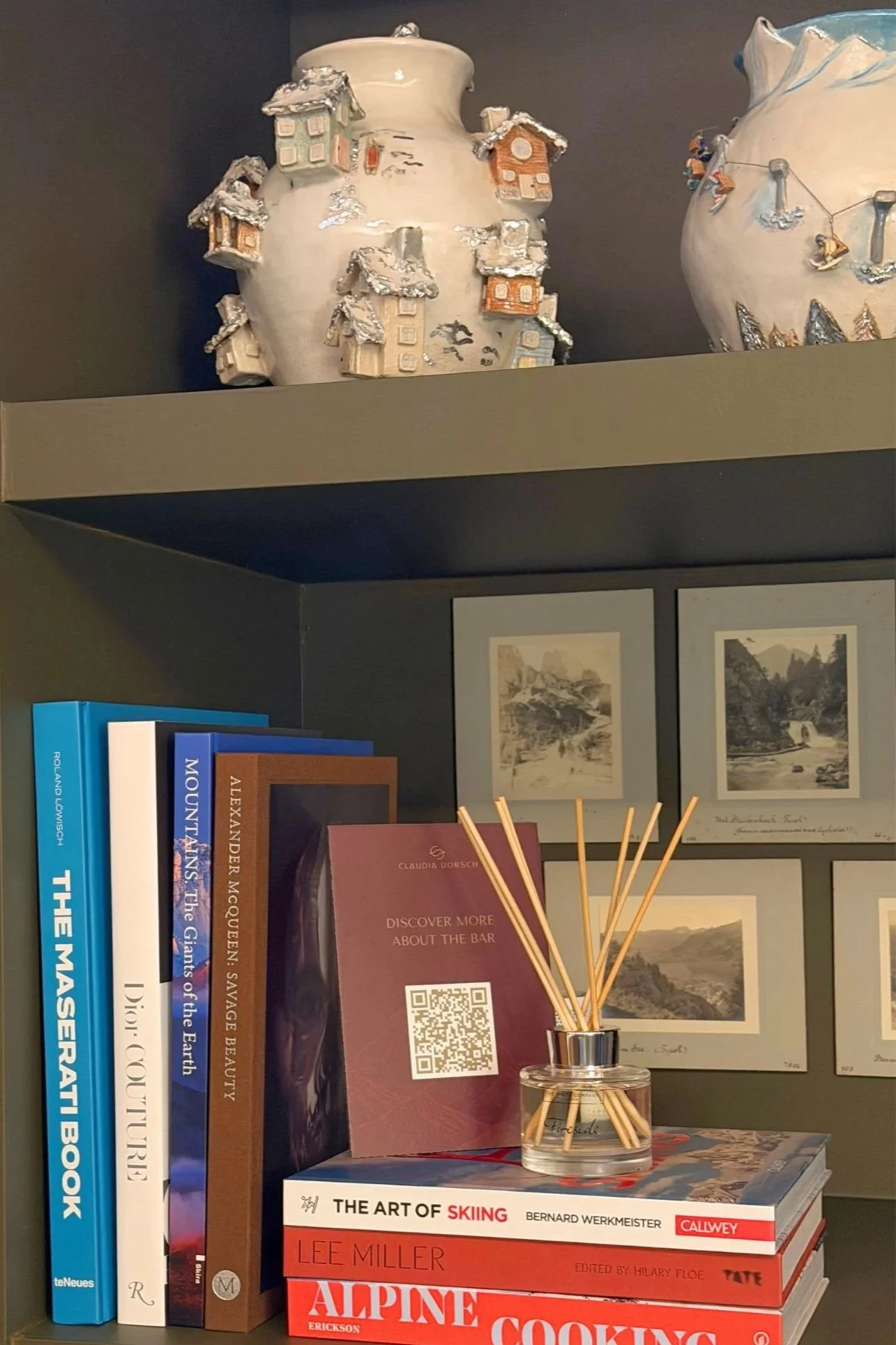
Photo credit: Sandra van Aalst
The attention to detail in The Chalet was second to none, so I took this close-up as an example of how thoughtfully the shelves had been styled. Claudia’s ethos was that a home without books has not yet been properly lived in: “You can sit down, take a book and escape for a moment.” Dressed by Ultimate Library, the shelves held several hardback books relevant to a mountain home, including Alpine Cuisine and a book about the mountains, alongside glossy fashion titles. Behind the books was a selection of vintage photographs of mountain scenes, while on the shelf above, two ceramic vessels handmade by artisans offered playful references to Alpine life, featuring little chalets and a ski lift.
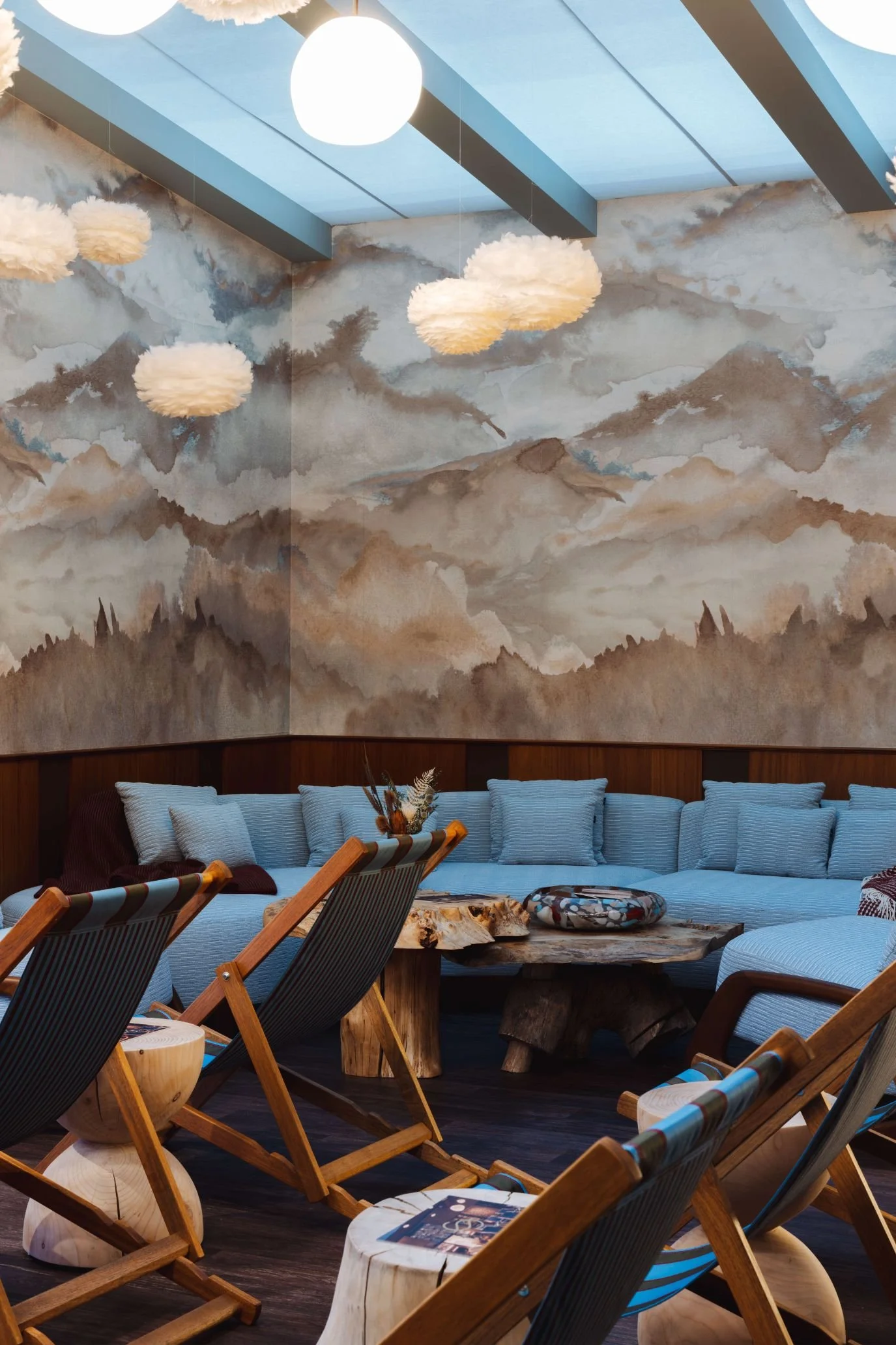
Photography by Nathan Wood / @nathanllwood courtesy of Claudia Dorsch
The reimagined mountain terrace was just as impressive as the rest of The Chalet. The deckchairs were upholstered in striped fabric developed with Colours of Arley in Claudia’s signature red, blue and green, while outdoor furniture by Coco Wolf was upholstered in Perennials fabric. Tom Dixon’s Melt pendant lights and Phillip Jeffries’ abstract mountain-like wallcovering carried the references through to the terrace. It was the perfect place to sit back and relax while watching a film choreographed by McKay Williamson which showed Alpine landscapes through the seasons. Or you could get up and dance to the live DJ. Claudia explained that music is no modern addition to the mountains. “Long before amplification, the sound of cowbells and the alphorn was how a valley announced itself. By the 1970s, the decade this lounge leans on, discos like St Moritz’s Dracula Club, founded by Gunter Sachs, became one of the most guarded scenes in the Alps: the day ended on the slopes and continued on the dance floor. That is the lineage that CLUB KIVA belongs to, and why its DJ console sits so naturally on this terrace.”
LET’S SUM UP
Back to the Future – The Chalet Reimagined was so much more than an exhibition installation. It was an exceptional example of how thoughtful design can make us feel at home, as well as a celebration of the makers and collaborators who brought Claudia’s vision to life. If you would like to see more of Claudia Dorsch’s interiors, do visit her website here: https://www.claudiainteriors.co.uk
If you enjoyed this article and would like to read more about Decorex, you can head over to the following articles:
Decorex 2026: My Styling and Design Takeaways
Decorex 2026 Preview: What I’m Looking Forward to Seeing
From Fallen Trees to Forever Pieces: Handcrafted furniture and home decor from salvaged urban trees

I’m Sandra, an interior writer, stylist, photographer for interior magazines and a Sunday Times best-selling author, sharing ideas to help you style your home with confidence and ease.
If you love interiors and want your home to feel stylish, pulled together, yet still personal, you’ve come to the right place. I’ll be sharing styling advice to help you edit, layer, and finish your home with confidence, alongside articles on what’s happening in the interiors world — from design events and colour stories to features on interior gurus.
I also take you on tours of beautifully styled homes from around the world, offering inspiration and styling ideas to steal for your own space. Ultimately, I’ll show you how a little bit of styling can be transformational and take your home to a whole new level.
If you’d like to find out more about me click here